
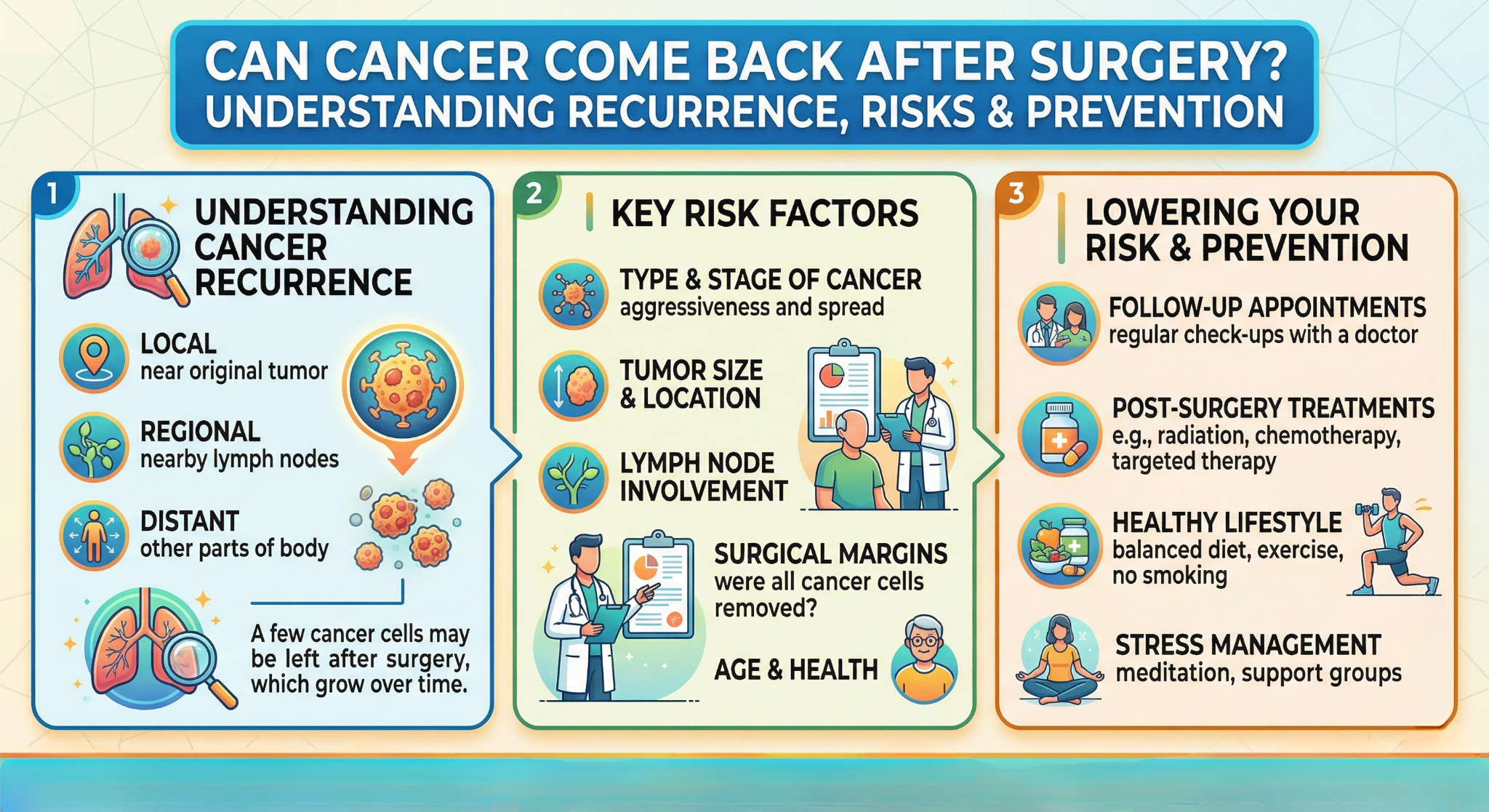
Cancer surgery is often a major milestone in a patient’s journey toward recovery. Many people believe that once a tumor is removed, the cancer is completely gone. But an important question remains: Can cancer come back after surgery?
The short answer is yes, it can—but understanding why it happens and how to monitor it can make a significant difference in outcomes and peace of mind.
What Does Cancer Surgery Aim to Do?
Cancer surgery is designed to remove:
- The primary tumor
- A margin of surrounding healthy tissue (to ensure no cancer cells are left behind)
- Nearby lymph nodes or lymphovascular tissue that may contain microscopic disease
In many cases, surgery can be curative—especially when the cancer is detected early. However, cancer is a complex disease, and even the most advanced surgical techniques cannot always guarantee complete eradication.
Why Can Cancer Come Back After Surgery?
1. Microscopic Cancer Cells
Even when scans appear clear, tiny cancer cells—known as micrometastases—may remain undetected in the body. These cells can grow over time and lead to recurrence.
2. Cancer Biology
Some cancers are more aggressive than others. The biological behavior of the tumor plays a key role in determining the risk of recurrence.
3. Stage at Diagnosis
- Early-stage cancers have a lower risk of recurrence
- Advanced-stage cancers (where cancer has spread) carry a higher risk
4. Incomplete Elimination
In rare cases, cancer cells may remain at the surgical margins or in nearby lymph nodes.
Types of Cancer Recurrence
Understanding recurrence types helps patients stay informed:
🔹 Local Recurrence
Cancer returns in the same area where it originally developed.
🔹 Nodal Recurrence
Cancer reappears in the nearby lymph nodes.
🔹 Distant Recurrence (Metastasis)
Cancer spreads to other organs such as the liver, lungs, or bones.
Factors That Influence Recurrence Risk
Several factors determine whether cancer is likely to return:
- Cancer stage at diagnosis
- Tumor grade and aggressiveness
- Type of organ involved (e.g., colon, pancreas, liver)
- Lymph node involvement
- Response to additional treatments like chemotherapy or radiation
- Patient’s overall health and immune system
The Role of Post-Surgery Treatment
Surgery is often just one part of the treatment plan. Many patients may require:
- Chemotherapy
- Radiation therapy
- Targeted therapy or immunotherapy
These treatments aim to destroy any remaining cancer cells and reduce the risk of recurrence.
Why Follow-Up Care Is Critical
A structured follow-up plan is essential after cancer surgery.
What Does Follow-Up Include?
- Regular clinical examinations
- Periodic imaging scans (CT, MRI, PET)
- Blood tests and tumor markers
- Monitoring for symptoms
The 5-Year Rule
Most recurrences happen within the first 5 years after surgery, which is why this period is crucial for monitoring.
Signs You Should Not Ignore
While routine follow-ups are key, patients should also watch for symptoms such as:
- Unexplained weight loss
- Persistent pain
- Fatigue
- Changes in bowel or bladder habits
- New lumps or swelling
Early detection of recurrence often leads to better treatment outcomes.
Can Cancer Recurrence Be Prevented?
While not all recurrences can be prevented, you can reduce risk by:
- Following your doctor’s treatment and follow-up plan
- Maintaining a healthy diet (rich in fiber, low in processed foods)
- Staying physically active
- Avoiding tobacco and excessive alcohol
- Managing stress and overall health
Cancer recurrence can be a difficult reality, but it is not the end of the road. Advances in oncology have made it possible to detect and treat recurrent cancer more effectively than ever before.
Staying informed, proactive, and consistent with follow-ups can make all the difference.
Frequently Asked Questions (FAQs)
1. How common is cancer recurrence after surgery?
The risk varies depending on the type and stage of cancer. Early-stage cancers have a lower risk, while advanced cancers have a higher chance of recurrence.
2. How long after surgery can cancer come back?
Cancer can recur months or even years after surgery, but most recurrences occur within the first 2–5 years.
3. Can recurrence be treated again?
Yes. Treatment options may include surgery, chemotherapy, radiation, or targeted therapies depending on the situation.
4. Does a successful surgery mean I am cancer-free?
Surgery may remove visible cancer, but microscopic cells can remain. That’s why follow-up care is essential.
5. What is the best way to detect recurrence early?
Regular follow-ups, imaging tests, and being alert to new symptoms are the most effective ways.
If you or your loved one has undergone cancer surgery, don’t skip follow-ups. Early detection of recurrence can significantly improve outcomes.
👉 Consult a specialist today to create a personalized follow-up plan.
👉 Stay proactive. Stay informed. Stay healthy.
For expert guidance, book an appointment with a GI & HPB surgical oncology specialist and take control of your recovery journey.