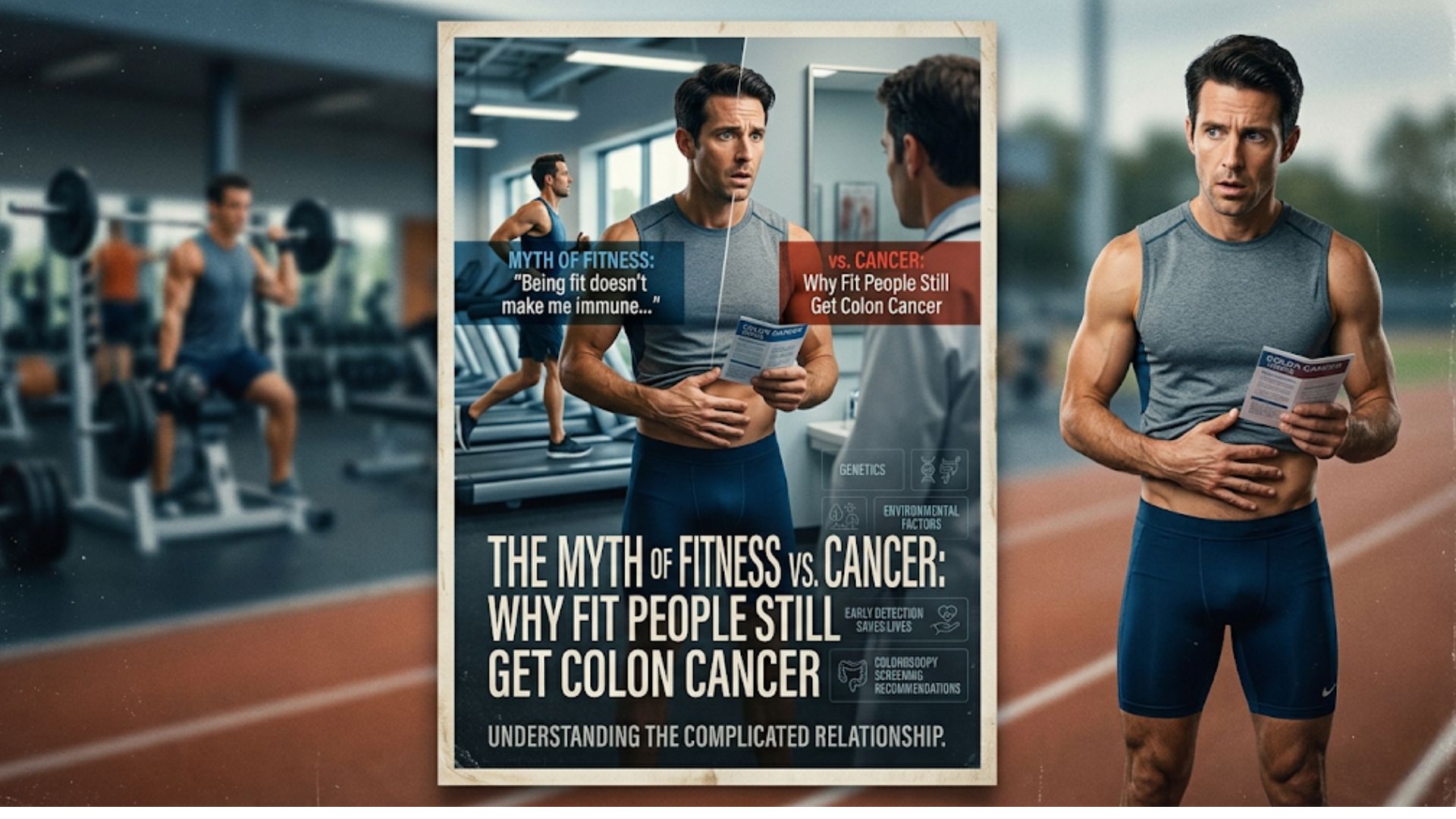
We often associate fitness with immunity against serious illnesses. If you exercise regularly, eat well, and maintain a healthy weight, it feels like you’re doing everything right. But here’s a reality check—being fit does not make you immune to colon cancer.
In recent years, there has been a concerning rise in colon cancer among young and otherwise healthy individuals. This challenges the long-standing belief that only older or unhealthy people are at risk.
So why does this happen? Let’s break the myth.
Fitness Is Not a Guarantee Against Colon Cancer
Living a healthy lifestyle significantly reduces your risk—but it doesn’t eliminate it. Colon cancer is influenced by multiple factors beyond visible fitness, including:
- Genetics
- Random cellular mutations
- Gut microbiome imbalance
- Environmental exposures
Even marathon runners and gym enthusiasts are not completely risk-free.
Hidden Risk Factors You Can’t See
1. Genetics: The Invisible Risk
Some individuals carry inherited genetic mutations (like Lynch syndrome or familial adenomatous polyposis) that increase their risk—regardless of how healthy they appear.
👉 If you have a family history of colon cancer, your risk is significantly higher.
2. Random Mutations: Bad Luck Matters Too
Cancer can sometimes develop due to random DNA mutations during cell division. This means even people with no risk factors can develop colon cancer.
3. The Gut Microbiome Connection
Your gut is home to trillions of bacteria that influence inflammation, immunity, and cancer risk.
Even in fit individuals, factors like:
- Low fiber intake
- High processed food consumption
- Antibiotic overuse
can disrupt the microbiome and increase cancer risk.
4. “Hidden” Lifestyle Risks
You may look fit on the outside but still have internal risk factors such as:
- Chronic stress
- Poor sleep
- Occasional binge eating or alcohol consumption
- Sedentary work habits
These can silently contribute to colon cancer risk over time.
Why Colon Cancer Is Rising in Young Adults
Globally, doctors are seeing more cases in people under 50. Possible reasons include:
- Ultra-processed diets
- Low fiber intake
- Rising obesity (even in “fit-looking” individuals)
- Environmental toxins
- Microbiome changes
👉 The key takeaway: appearance ≠ internal health
Symptoms You Should Never Ignore
Even if you’re young and fit, watch out for:
- Blood in stool
- Persistent abdominal pain
- Unexplained weight loss
- Changes in bowel habits (constipation or diarrhea)
- Fatigue
⚠️ Don’t dismiss these as minor issues like acidity or IBS.
The Power of Early Detection
Colon cancer is highly treatable when detected early.
Screening tools include:
- Colonoscopy (gold standard)
- Stool-based tests
- CT colonography
If detected early, survival rates are over 90%.
Who Should Get Screened?
- Age 45 and above (earlier if high risk)
- Family history of colon cancer
- Persistent digestive symptoms
- Known genetic syndromes
👉 In India, awareness is still low—making screening even more crucial.
Breaking the Myth: What You Should Do
Even if you’re fit:
- Maintain a high-fiber diet
- Limit processed foods and red meat
- Stay physically active
- Manage stress and sleep
- Know your family history
- Don’t delay screening
Frequently Asked Questions (FAQs)
1. Can fit people really get colon cancer?
Yes. Fitness reduces risk but does not eliminate it. Genetics and other hidden factors still play a role.
2. At what age should I start screening?
Screening is recommended from age 45, or earlier if you have risk factors like family history.
3. Does exercise prevent colon cancer completely?
No. Exercise lowers risk but cannot fully prevent cancer.
4. What is the biggest hidden risk factor?
The gut microbiome imbalance is emerging as a major but often overlooked factor.
5. Is colon cancer curable?
Yes—if detected early, colon cancer is highly treatable with excellent survival rates.
Being fit is one of the best things you can do for your health—but it’s not a guarantee against cancer. Awareness, vigilance, and timely screening are just as important as exercise and diet.
👉 Don’t let the “I’m fit, so I’m safe” myth delay your diagnosis.
If you have symptoms or a family history of colon cancer, consult a specialist today.
✔ Schedule your screening
✔ Talk to your doctor
✔ Share this information with your loved ones
Early detection doesn’t just save lives—it saves YOUR life.