
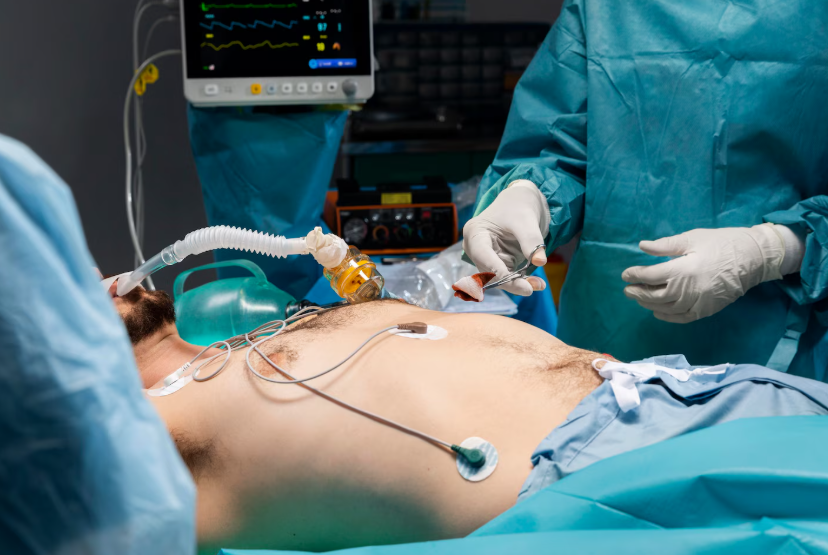
Facing a colon cancer diagnosis can feel overwhelming. But thanks to advances in surgical technology and expertise — especially minimally invasive techniques — many patients now have access to effective treatment with less trauma, shorter recovery, and a quicker return to daily life. Under experienced care (for example, by specialists like Dr. Asit Arora) this modern approach offers a blend of oncologic safety and patient comfort.
This blog explores what minimally invasive surgery (MIS) for colon cancer is, why it matters, who it’s for, the benefits and limitations, and what patients should know as they navigate treatment options.
What Is Minimally Invasive Colon Cancer Surgery?
Traditional “open” colon surgery requires a large abdominal incision to access the colon, remove the tumor, and perform lymph-node clearance. By contrast, in MIS — which includes laparoscopic surgery and robotic-assisted surgery — surgeons make several small “keyhole” incisions. Through these ports, a tiny camera and specialized instruments are used to visualize and remove the cancerous portion, while adhering strictly to oncologic principles (adequate margins, lymph-node dissection, safe reconnection of intestines).
Advances over the last few decades — better imaging, improved instruments, refined surgical technique — have made MIS a standard option for many colon-cancer patients.
Why MIS Is Often a Better Option — The BenefitsWhen feasible and performed by trained surgeons, MIS offers several compelling advantages compared to open surgery:
- Less postoperative pain & faster recovery: Smaller incisions mean less tissue trauma and less disruption, leading to reduced pain. Patients often recover bowel function sooner, start oral diet earlier, and mobilize faster.
- Shorter hospital stay: Many patients undergoing MIS leave the hospital earlier than those with open surgery, helping reduce hospitalization burdens.
- Less wound-related complications: Smaller incisions lower the risk of wound infections, hernia, and related complications compared to a large laparotomy incision.
- Quicker return to normal life & adjuvant therapy: Faster recovery means patients can resume daily activities and, if needed, start chemotherapy or other adjuvant treatments sooner — which can be crucial for outcomes and quality of life.
- Good long-term oncological outcomes: Numerous studies have shown that for properly selected patients (typically stages I–III colon cancer), MIS — when done with oncological rigor — yields disease-free survival (DFS) and overall survival (OS) rates comparable to open surgery. For example, a retrospective analysis of 842 patients showed 10-year DFS of ~75% and OS of ~79%.
In short: MIS gives patients the best of both worlds — effective cancer treatment and gentler recovery.
Who Is a Candidate — And When MIS May Not Be Suitable
MIS is not universally applicable; whether it can be used depends on several factors. Generally, MIS is considered when:
- The tumor is localized (typically early to mid-stage colon cancer, without extensive spread).
- The patient’s overall health status, anatomy, and prior surgical history are favourable (e.g. no prohibitive adhesions, acceptable comorbidities).
- The surgical team has adequate experience and infrastructure to perform laparoscopic or robotic colectomy safely.
However, MIS may not be ideal if:
- The tumor is very large, locally advanced, or involves complicated anatomy or adjacent organs.
- There are dense adhesions from prior surgeries or other complicating factors.
- The surgical center lacks necessary expertise or instruments, since oncologic safety depends heavily on technical precision.
In such cases, open surgery remains a valid and sometimes safer choice.
What Recent Evidence Says — Safety & Efficacy of MIS
Evidence from multiple randomized controlled trials and large observational studies has consolidated MIS (laparoscopic and robotic) as a safe and effective method for colon cancer surgery when done appropriately.
- A 2025 retrospective study of 842 colon-cancer patients treated with MIS (laparoscopic or robotic) reported excellent long-term results: 10-year disease-free survival ~ 75%, and overall survival ~ 79%.
- Perioperative advantages include fewer complications, lower postoperative morbidity, shorter hospital stay, earlier recovery of bowel function, and less immune suppression compared to open surgery.
- While robotic surgery may offer some technical advantages over standard laparoscopy (e.g. better instrument control, 3D visualization), data suggest that laparoscopic colectomy remains the standard minimally invasive method due to shorter operating times, lower cost, and comparable safety in many cases.
Thus, when performed by experienced surgeons in capable centers, MIS should be considered a standard of care for appropriately selected colon cancer patients.
What Patients Should Ask
If you or a loved one is being advised for colon cancer surgery and MIS is offered, here are key questions to discuss with your surgical team:
- Is my cancer stage and location suitable for MIS?
- How many minimally invasive colectomies has the surgeon done? What was their complication rate?
- What are the specific advantages and risks in my situation?
- After surgery, when can I expect to resume diet, activity, and start chemotherapy?
- What follow-up will be required — how will recurrence surveillance be handled?
Also, it’s important to choose a hospital/surgeon with experience, adequate equipment, and a multidisciplinary team — especially if adjuvant therapy or complex reconstruction is likely.
A New Era in Colon Cancer Treatment
Minimally invasive surgery represents a major shift in how we treat colon cancer — combining effective oncologic control with gentler surgery and faster recovery. For many patients today, MIS offers hope not only of survival, but of maintaining quality of life, returning home sooner, and healing with less trauma.
With ongoing improvements in surgical technique — including robotic platforms — and growing long-term evidence, MIS is fast becoming the preferred standard for colon cancer surgery when circumstances allow.
If you or a loved one faces colon cancer, it’s worth discussing MIS as a viable, and often ideal, option.