
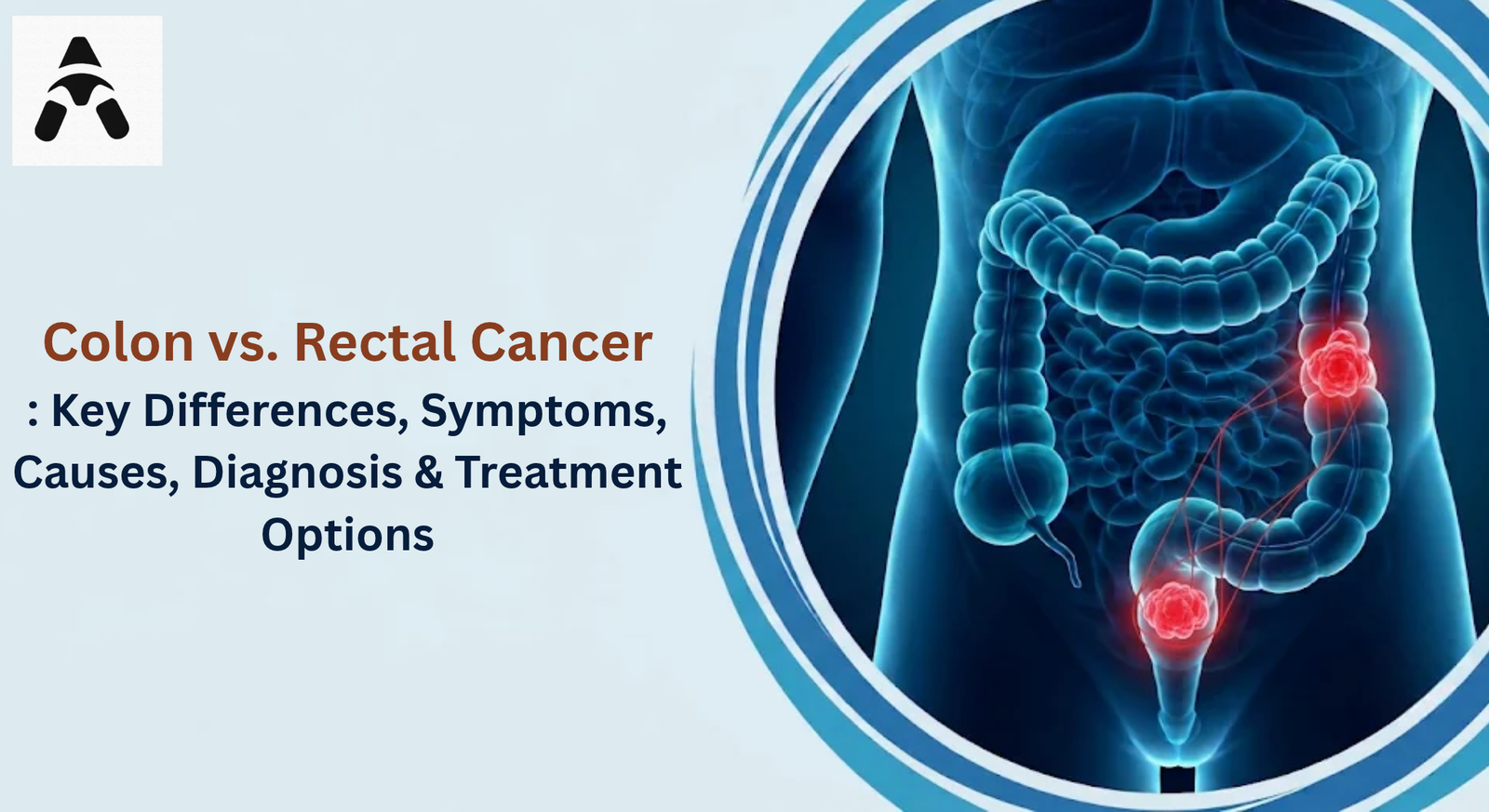
Hearing the words colon cancer or rectal cancer can be frightening, especially when you are unsure what they mean or how they affect your health. Although both conditions are types of colorectal cancer, they develop in different parts of the digestive system and may require different treatment approaches.
You may wonder whether rectal cancer is the same as colon cancer, whether their symptoms are different, or which treatment offers better outcomes. Understanding these differences can help you make informed decisions and seek medical attention at the right time.
If you or someone in your family is experiencing digestive problems, unexplained weight loss, or blood in the stool, consulting an experienced cancer specialist is an important step.
Let’s understand the differences between colon cancer and rectal cancer, their symptoms, causes, diagnosis, and available treatment options.
What Is the Difference Between Colon Cancer and Rectal Cancer?
Colon cancer and rectal cancer are both types of colorectal cancer. The primary difference between them is their location within the large intestine.
The colon and rectum are two important parts of the digestive system. The colon absorbs water and helps form stool, while the rectum stores stool before it leaves the body.
- Colon Cancer: Develops in the colon, which forms the major part of the large intestine.
- Rectal Cancer: Develops in the rectum, the final section of the large intestine located just before the anus.
- Colorectal Cancer: A general medical term used for cancers affecting either the colon or rectum.
Although both cancers share similar risk factors and symptoms, their location plays an important role in determining the treatment approach.
Colon Cancer vs. Rectal Cancer: Key Differences
Understanding the differences between these two conditions can help patients better understand their diagnosis and treatment options.
| Feature | Colon Cancer | Rectal Cancer |
| Location | Colon (large intestine) | Rectum (end of large intestine) |
| Common Symptoms | Abdominal pain, bowel habit changes, blood in stool | Rectal bleeding, bowel urgency, incomplete bowel movements |
| Diagnosis | Colonoscopy, biopsy, and imaging | Colonoscopy, biopsy, and pelvic MRI |
| Surgery | Removal of the affected part of the colon | Removal of the affected rectal section and nearby tissues |
| Radiation Therapy | Not routinely required in many cases | Commonly considered for locally advanced cases |
| Treatment Planning | Depends on tumour location and cancer stage | Requires detailed assessment of the pelvis and surrounding structures |
Important: Neither colon cancer nor rectal cancer is automatically more dangerous than the other. The outcome depends on the cancer stage, tumour characteristics, overall health, and response to treatment.
What Are the Symptoms of Colon Cancer and Rectal Cancer?
One of the biggest challenges with colorectal cancer is that early symptoms can be mild or may not appear at all. This is why persistent changes in bowel habits and unexplained digestive problems should never be ignored.
Common Symptoms of Colon Cancer
Colon cancer can develop gradually, and its symptoms may sometimes resemble common digestive problems.
Watch out for the following warning signs:
- Persistent abdominal pain or cramps.
- Unexplained weight loss.
- Changes in bowel habits, including constipation or diarrhoea.
- Blood in the stool.
- Persistent tiredness or weakness.
- Iron-deficiency anemia.
- A feeling that the bowel has not emptied completely.
Common Symptoms of Rectal Cancer
Since rectal cancer develops near the end of the digestive tract, its symptoms may directly affect bowel movements.
Common warning signs include:
- Rectal bleeding or blood during bowel movements.
- A frequent urge to pass stool.
- A feeling of incomplete bowel emptying.
- Narrower stools than usual.
- Rectal discomfort or pressure.
- Mucus in the stool.
- Changes in bowel habits.
- Unexplained weight loss.
When Should You Consult a Doctor?
If you experience rectal bleeding, persistent changes in bowel habits, unexplained weight loss, or iron-deficiency anemia, schedule a medical consultation.
Do not automatically assume that rectal bleeding is caused by piles or haemorrhoids. A proper medical examination is important to identify the actual cause.
Why Does Colorectal Cancer Develop?
There is no single cause of colon or rectal cancer. In many cases, these cancers begin as small growths called polyps on the inner lining of the large intestine.
Certain types of polyps can gradually develop into cancer over several years. However, not every polyp becomes cancerous.
Common Risk Factors for Colorectal Cancer
Several factors may increase the risk of developing colorectal cancer:
1. Age: The risk generally increases with age, although colorectal cancer can also affect younger adults.
2. Family History: Having close relatives with colorectal cancer can increase your risk.
3. Inherited Conditions: Genetic conditions such as Lynch syndrome and familial adenomatous polyposis (FAP) can significantly increase the risk.
4. Unhealthy Diet: Regular consumption of processed meat and high amounts of red meat may increase colorectal cancer risk.
5. Smoking and Alcohol: Both smoking and alcohol consumption are associated with an increased risk.
6. Obesity: Being overweight or obese may contribute to a higher risk of colorectal cancer.
7. Physical Inactivity: A sedentary lifestyle and lack of regular exercise may increase the risk.
8. Inflammatory Bowel Disease: Long-term conditions such as ulcerative colitis and Crohn’s disease can increase the risk of colorectal cancer.
According to the World Health Organization (WHO), colorectal cancer is among the most commonly diagnosed cancers worldwide, accounting for approximately 10% of all cancer cases.
How Are Colon Cancer and Rectal Cancer Diagnosed?
Accurate diagnosis is essential for understanding the location of the cancer, tumour size, whether it has spread, and its stage. Doctors use different diagnostic tests to develop an appropriate treatment plan.
1. Colonoscopy
A colonoscopy allows doctors to examine the inside of the colon and rectum using a thin, flexible tube equipped with a camera. If an abnormal growth or suspicious area is identified, a tissue sample may be collected for further testing.
2. Biopsy
A biopsy involves removing a small tissue sample and examining it under a microscope. It helps confirm whether cancer cells are present and identifies the type of cancer.
3. CT Scan
A CT scan creates detailed images of internal organs and helps doctors determine whether cancer has spread to nearby tissues, lymph nodes, or distant organs.
4. MRI Scan
A pelvic MRI is particularly important for rectal cancer. It helps assess tumour depth, nearby lymph node involvement, and the tumour’s relationship with surrounding structures.
5. Blood Tests and CEA
Blood tests help evaluate overall health and identify conditions such as anaemia.
Doctors may also check carcinoembryonic antigen (CEA), a tumour marker that can be useful in monitoring certain colorectal cancer patients. However, CEA alone cannot confirm or rule out cancer.
What Are the Treatment Options for Colon and Rectal Cancer?
The most suitable treatment depends on several factors, including cancer stage, tumour location, medical history, and the patient’s overall health.
Some patients may require a single treatment approach, while others benefit from a combination of surgery, chemotherapy, radiation therapy, targeted therapy, or immunotherapy.
Colon Cancer Treatment Options
1. Surgery
Surgery is a primary treatment option for many localised colon cancers. A procedure called colectomy involves removing the affected section of the colon along with nearby lymph nodes.
The extent of surgery depends on the tumour’s location and the stage of the disease.
2. Chemotherapy
Chemotherapy uses anti-cancer medicines to destroy cancer cells or stop their growth. It may be recommended after surgery to reduce the risk of recurrence or for more advanced disease.
3. Targeted Therapy and Immunotherapy
Depending on the tumour’s molecular characteristics, certain patients may benefit from targeted medicines or immunotherapy. Specific biomarker testing helps doctors determine whether these treatments are appropriate.
Rectal Cancer Treatment Options
1. Surgery
Surgery involves removing the cancerous portion of the rectum along with surrounding tissues and lymph nodes when necessary.
The type of surgery depends on the tumour’s location, size, stage, and proximity to the anal sphincter muscles.
Radiation therapy uses high-energy beams to destroy cancer cells. It is often considered before surgery for locally advanced rectal cancer to shrink the tumour and improve treatment outcomes.
3. Chemotherapy
Chemotherapy may be recommended before surgery, alongside radiation therapy, or after surgery depending on the cancer stage and treatment strategy.
4. Sphincter-Preserving Surgery
Whenever medically appropriate, surgeons may consider procedures that preserve the anal sphincter muscles and help patients avoid a permanent colostomy.
However, this depends on tumour location, surgical safety, and whether the cancer can be completely removed.
What Is the Typical Treatment Process for Colorectal Cancer?
Every patient’s treatment journey is different. However, the general process usually involves the following steps:
| Treatment Stage | What Happens |
| Initial Consultation | Review of symptoms, medical history, and physical examination |
| Diagnosis | Colonoscopy, biopsy, and necessary investigations |
| Cancer Staging | CT scan, MRI, and other tests to assess disease spread |
| Treatment Planning | Personalised treatment plan based on tumour characteristics |
| Treatment | Surgery, chemotherapy, radiation, or a combination |
| Follow-up | Regular check-ups and monitoring for recurrence |
The goal of colorectal cancer treatment is not just to remove the tumour but also to control the disease, preserve bowel function whenever possible, and maintain the patient’s quality of life.
Meet Dr. Asit Arora – GI & HPB Surgical Oncologist in Delhi
When dealing with colorectal cancer, choosing an experienced surgical oncologist is an important part of treatment planning. Complex cancers involving the digestive system often require specialised surgical expertise and a multidisciplinary approach.
Dr. Asit Arora is a GI & HPB Surgical Oncologist and Clinical Lead at Apollo Hospitals, Delhi, with more than 20 years of experience in cancer surgery.
His qualifications include:
- MBBS
- MS in General Surgery
- M.Ch. in Gastrointestinal Surgery
Areas of Expertise
Dr. Asit Arora’s areas of expertise include:
- Colon cancer treatment and surgery.
- Rectal cancer surgery.
- Gastrointestinal cancer surgery.
- Stomach cancer treatment.
- Advanced gastrointestinal surgical procedures.
- Minimally invasive cancer surgery.
- Robotic-assisted cancer surgery.
- Complex cancers involving the digestive system and liver.
Dr. Arora focuses on evidence-based treatment planning, advanced surgical techniques, and personalised patient care. Treatment recommendations are based on the patient’s diagnosis, tumour characteristics, and overall health.
How Can You Reduce Your Risk of Colorectal Cancer?
Although not every case of colorectal cancer can be prevented, certain lifestyle changes may help reduce your risk.
Here are some practical steps:
- Include more fruits, vegetables, and fibre-rich foods in your daily diet.
- Limit processed meat and excessive red meat consumption.
- Maintain a healthy body weight.
- Stay physically active and exercise regularly.
- Avoid smoking.
- Limit alcohol consumption.
- Discuss appropriate colorectal cancer screening with your doctor, particularly if you have a family history or other risk factors.
Remember that screening recommendations vary depending on age, family history, and individual risk. If you already have symptoms, consult a doctor rather than waiting for a routine screening appointment.
Frequently Asked Questions About Colon and Rectal Cancer
1. Is colon cancer more dangerous than rectal cancer?
No. Neither condition is automatically more dangerous than the other. The severity depends on the cancer stage, tumour characteristics, spread to other organs, and response to treatment.
2. Can colon cancer and rectal cancer cause blood in the stool?
Yes. Both colon cancer and rectal cancer can cause blood in the stool. The blood may appear bright red, dark, or mixed with stool depending on its source and other factors.
3. Can rectal cancer be treated without surgery?
In selected patients, rectal cancer may achieve a complete clinical response after treatment involving chemotherapy and radiation therapy. Such patients may be considered for a carefully monitored watch-and-wait approach instead of immediate surgery. This requires specialist assessment and intensive follow-up.
4. What is the difference between a colonoscopy and a biopsy?
A colonoscopy is a procedure that allows doctors to examine the inside of the colon and rectum. A biopsy involves collecting a small tissue sample for laboratory examination. Both play important roles in diagnosing colorectal cancer.
5. Does every patient with colon cancer need chemotherapy?
No. Chemotherapy is not required for every colon cancer patient. The decision depends on the cancer stage, surgical findings, lymph node involvement, tumour characteristics, and other medical factors.
6. When should I consult a cancer specialist in Delhi?
You should consider consulting a specialist if you experience persistent changes in bowel habits, rectal bleeding, unexplained weight loss, continuous abdominal pain, or iron-deficiency anaemia. Early evaluation can help identify the cause and determine whether further investigations are necessary.
Consult Dr. Asit Arora for Colorectal Cancer Treatment in Delhi
A colorectal cancer diagnosis can bring many questions and concerns, but understanding your condition and exploring the available treatment options can help you move forward with confidence.
If you are looking for colon cancer treatment in Delhi, rectal cancer surgery, or an experienced GI and HPB surgical oncologist, consider consulting Dr. Asit Arora at Apollo Hospitals, Delhi.
Doctor: Dr. Asit Arora – GI & HPB Surgical Oncologist
Hospital: Apollo Hospitals, Delhi
Address: OPD – 67, Apollo Hospital, NH-19, Jasola Vihar, New Delhi, Delhi – 110020.
Call: +91 98212 16022