
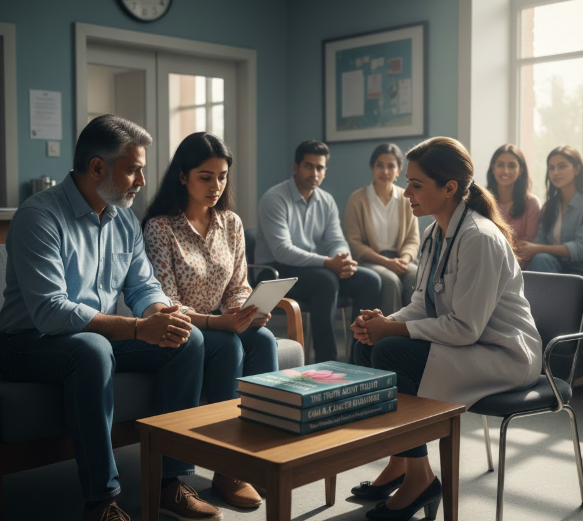
Doctor, please don’t tell him he has cancer. He won’t be able to take it.”
This is one of the most common requestsDr. Asit Arora, Director of G.I. & H.P.B. Oncosurgery, hears almost every day in the OPD.
This request comes from a place of deep love, fear, and protection. Families want to shield their loved ones from emotional pain. But the question remains—is hiding a cancer diagnosis truly helpful, or does it silently cause more harm?
Let’s explore the medical, emotional, and ethical reality behind this difficult decision.
Why Families Ask Doctors to Hide a Cancer Diagnosis
In Indian families especially, cancer is often seen as a “death sentence.”
Many caregivers fear that:
- The patient will lose hope
- They will become depressed or anxious
- They will “give up” on life
These fears are understandable—but modern cancer care tells a very different story.
The Hidden Impact of Not Telling the Truth
1. Patients Often Sense the Truth Anyway
Cancer patients are rarely unaware. Changes in behavior, repeated hospital visits, whispered conversations, and evasive answers all send signals.
Instead of feeling protected, patients often experience:
- Constant anxiety
- Confusion
- Fear of the unknown
- A sense that something is being hidden
This uncertainty can be more frightening than the diagnosis itself.
2. Loss of Trust Hurts Healing
When patients eventually realize the truth—which often happens—they may feel:
- Betrayed by family
- Misled by doctors
- Isolated and excluded from their own care
Trust is the foundation of successful treatment. Once broken, it can impact emotional well-being and clinical outcomes.
The Power of Partnership: Why an Informed Patient Does Better
Informed Patients Are Stronger Patients
When patients understand their diagnosis:
- They actively participate in decision-making
- They follow treatment protocols better
- They ask relevant questions
- They feel more in control
Cancer treatment is not just about surgery or medicines—it’s about teamwork between the doctor, patient, and family.
Better Adherence, Better Outcomes
Multiple studies show that patients who are aware of their diagnosis:
- Complete treatment more consistently
- Cope better with side effects
- Report better quality of life
Knowledge doesn’t weaken patients—it empowers them.
Cancer Is NOT a Death Sentence
One of the biggest myths surrounding cancer is that it always means the end.
The Reality Today
With early detection and advanced treatments:
- Many cancers are highly curable
- Others can be controlled like chronic diseases
- Survival rates are improving every year
Robotic surgery, targeted therapy, immunotherapy, and personalized care have transformed cancer outcomes.
Fear comes from outdated information. Hope comes from facts.
Honesty Builds a Journey of Trust
Transparency Strengthens Relationships
When doctors and families communicate openly:
- Patients feel respected
- Families feel involved
- Doctors can guide treatment ethically and effectively
Honesty doesn’t mean being harsh. It means sharing the truth with empathy, sensitivity, and support.
How Doctors Share the Truth Compassionately
At Dr. Asit Arora’s practice, disclosure is:
- Gradual, not abrupt
- Tailored to the patient’s emotional readiness
- Supported by counseling and reassurance
- Focused on treatment options and hope
The goal is not to scare—but to prepare, empower, and heal.
Choosing Empathy Over Silence
Hiding a cancer diagnosis may feel protective, but silence often increases fear.
Truth, when shared with compassion, gives patients:
- Clarity
- Strength
- Dignity
- Hope
If you or a loved one are facing a cancer diagnosis, remember—you are not alone.
Let’s replace fear with facts, and silence with support.
Final Thought from Dr. Asit Arora
“Cancer patients don’t just need treatment. They need trust, honesty, and partnership. When we walk this journey together, outcomes are always better.”