
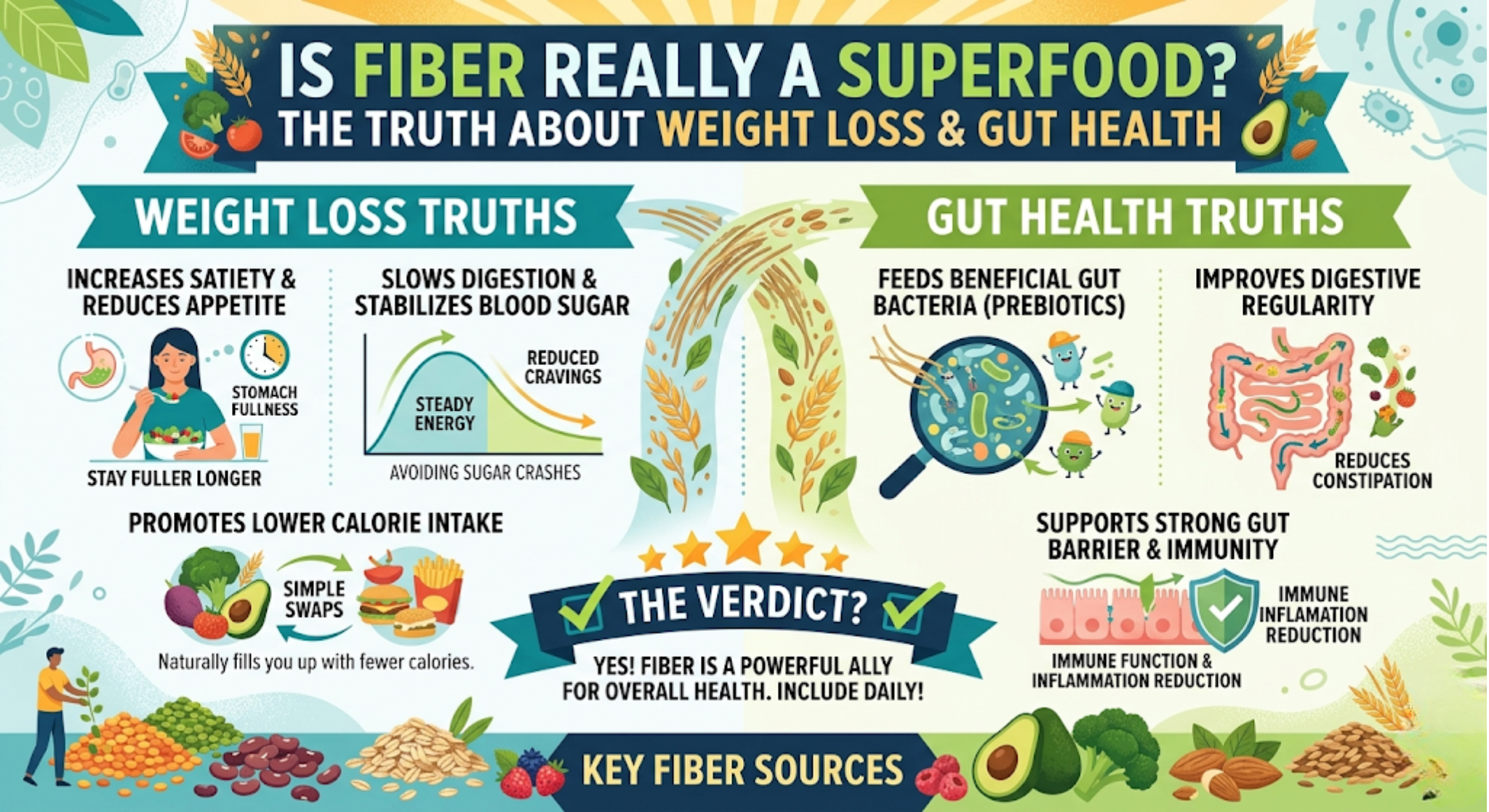
In the last few years, people have been talking a lot about fiber. It is included in weight loss diets, gut health supplements, and healthy eating plans. Everyone says fiber is the “magic ingredient” for better health. But is fiber really that good, or is it just another health trend?
According to Dr. Asit Arora, fiber is not a fad. It is one of the most important nutrients for maintaining digestive health, controlling weight, and reducing the risk of serious diseases like colon and rectal cancer.
In this blog, we will discuss what fiber is, how it works in your body, and why eating more fiber-rich foods can improve your overall health.
What Is Fiber?
Fiber is a type of carbohydrate found only in plant-based foods. Unlike other carbohydrates, your body cannot completely digest fiber. Instead, it moves through your digestive system and helps keep your gut healthy.
You can find fiber in:
- Fruits
- Vegetables
- Whole grains
- Pulses and lentils
- Seeds and nuts
Some high-fiber foods include:
- Apples
- Guavas
- Broccoli
- Carrots
- Radish
- Flax seeds
- Chia seeds
- Beans
Why Fiber Is Important for Gut Health
Your digestive system needs fiber to function properly. Fiber helps move waste through your intestines and supports healthy bowel movements.
Fiber is beneficial for gut health because it:
- Prevents constipation
- Improves digestion
- Helps healthy gut bacteria grow
- Reduces bloating over time
- Keeps your colon healthy
A healthy gut also supports:
- Better immunity
- Improved metabolism
- Lower inflammation levels in the body
Can Fiber Help With Weight Loss?
Some people believe fiber “melts fat.” That is not true. Fiber does not directly burn fat, but it can help you lose weight in a healthy and sustainable way.
1. Keeps You Full for Longer
Fiber slows digestion and helps you feel full for a longer time. This reduces overeating and unhealthy snacking.
2. Controls Blood Sugar Levels
High-fiber foods release sugar slowly into the bloodstream, preventing sudden spikes and crashes that increase hunger.
3. Reduces Cravings
Fiber-rich meals help stabilize appetite and reduce cravings for processed and unhealthy foods.
4. Supports Healthy Eating Habits
People who eat more fruits, vegetables, and whole grains usually consume fewer calorie-dense processed foods.
So, fiber is not a “fat-burning miracle,” but it is a powerful tool for healthy weight management.
How Fiber Helps Prevent Colon and Rectal Cancer
One of the most important health benefits of fiber is its role in reducing the risk of colorectal cancers.
Fiber supports cancer prevention in several ways:
- Reduces inflammation in the intestines
- Improves bowel movement regularity
- Decreases exposure of the colon lining to harmful substances
- Supports healthy gut bacteria that protect the digestive tract
A low-fiber diet combined with processed foods and lack of exercise may increase the risk of colon cancer, especially in younger adults.
Eating more fiber is a simple but important step toward better digestive health and cancer prevention.
Best Natural Sources of Fiber
Fruits
- Apples
- Guavas
- Pears
- Berries
Vegetables
- Broccoli
- Carrots
- Radish
- Spinach
Seeds
- Flax seeds
- Chia seeds
- Pumpkin seeds
Pulses and Lentils
- Chickpeas
- Kidney beans
- Moong dal
- Masoor dal
Whole Grains
- Oats
- Brown rice
- Whole wheat
- Quinoa
Easy Ways to Add More Fiber to Your Diet
You can make small daily changes to increase your fiber intake.
Here are some simple tips:
- Start your day with oats or fruits
- Add salad to lunch and dinner
- Replace white bread with whole wheat bread
- Eat lentils or beans regularly
- Snack on fruits instead of packaged foods
- Add flax or chia seeds to smoothies or curd
Remember to increase fiber intake gradually and drink enough water to avoid digestive discomfort.
How Much Fiber Do You Need Daily?
Most adults should aim for:
- Men: 30–38 grams of fiber daily
- Women: 21–25 grams of fiber daily
Unfortunately, many people consume less fiber because of high processed food intake and low vegetable consumption.
Signs You May Not Be Getting Enough Fiber
You may need more fiber if you:
- Are constipated frequently
- Feel hungry all the time
- Experience blood sugar fluctuations
- Have low energy levels
- Experience digestive discomfort
- Notice changes in bowel habits
Fiber is not just another health trend. It is a scientifically proven nutrient that supports digestion, weight management, blood sugar control, and cancer prevention.
Instead of searching for “miracle foods,” focusing on a balanced, fiber-rich diet can provide long-term health benefits for your body and gut.
As explained by Dr. Asit Arora, simple lifestyle changes like increasing fiber intake can play a major role in protecting digestive health and reducing the risk of colon and rectal cancers.
Frequently Asked Questions (FAQs)
1. What foods are highest in fiber?
Foods like fruits, vegetables, lentils, beans, seeds, and whole grains are excellent natural sources of fiber.
2. Can fiber help reduce belly fat?
Fiber does not directly burn belly fat. It helps control appetite, reduce overeating, and support healthy weight loss.
3. Is fiber good for diabetes?
Yes. Fiber helps slow sugar absorption and improves blood sugar control.
4. Can too much fiber be harmful?
Eating too much fiber suddenly can cause bloating or gas. Increase your intake gradually and drink enough water.
5. Does fiber help prevent colon cancer?
A high-fiber diet is associated with better colon health and may reduce the risk of colorectal cancers.
6. Are fiber supplements as good as natural fiber?
Natural food sources are generally better because they also provide vitamins, minerals, and antioxidants.
If you are experiencing symptoms like persistent constipation, bloating, unexplained weight loss, rectal bleeding, or changes in bowel habits, do not ignore them.
Consult Dr. Asit Arora for expert evaluation and advanced gastrointestinal cancer care.
Early lifestyle changes and timely screening can make a significant difference in preventing serious digestive diseases.