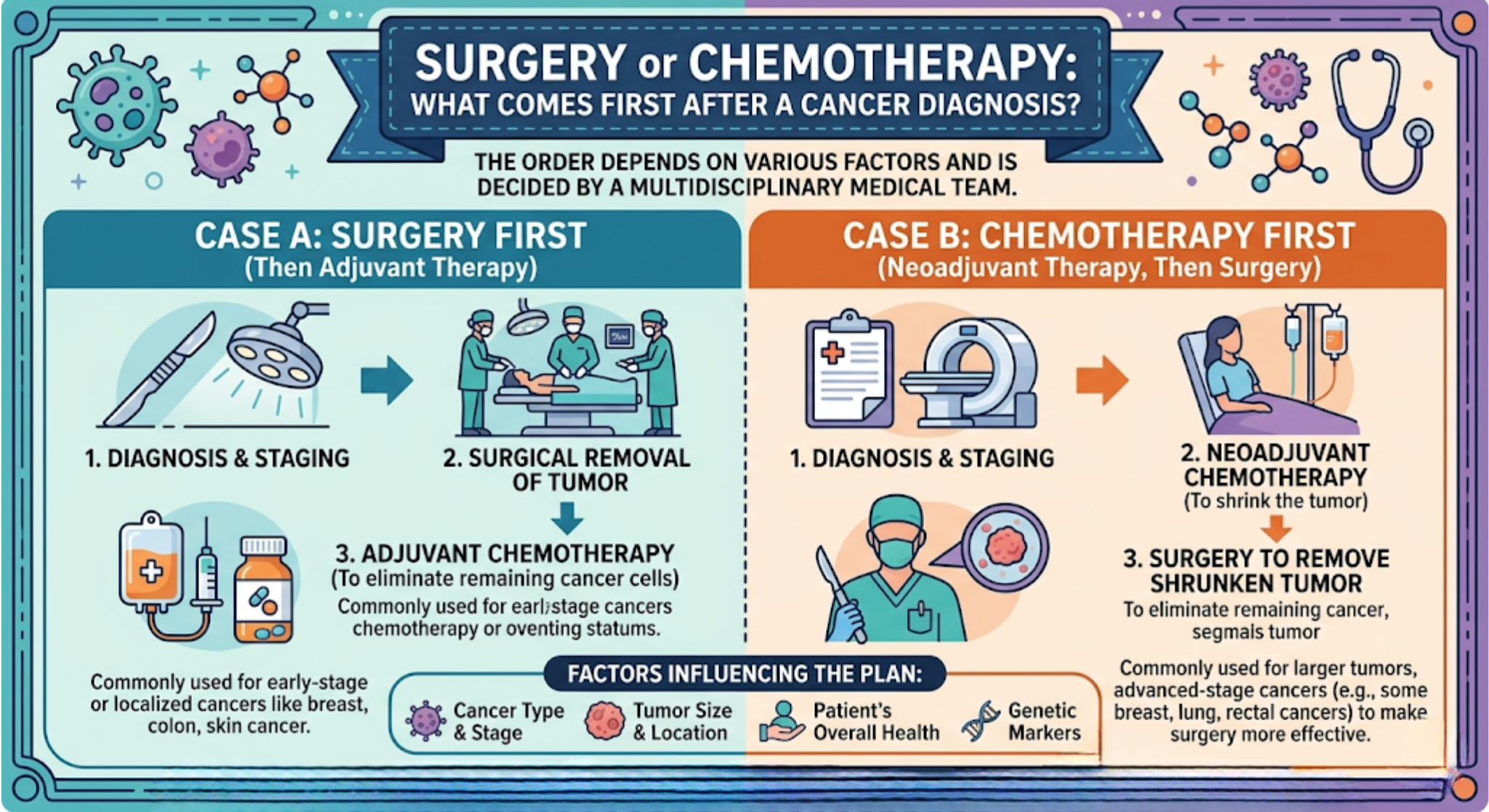
A cancer diagnosis often brings a wave of uncertainty—and one of the first questions patients ask is: “Should I have surgery immediately?”
While surgery is a cornerstone of cancer treatment, it is not always the first step. Modern oncology takes a highly personalized approach, where treatment is carefully planned to achieve the best possible outcome.
In this article, we break down how doctors decide whether surgery or chemotherapy comes first, and why this decision can significantly impact recovery and survival.
Understanding the Treatment Sequence
Cancer treatment is no longer a one-size-fits-all approach. A multidisciplinary team—often called a tumor board—evaluates each case. This team may include surgical oncologists, medical oncologists, radiologists, and pathologists.
Experts like Dr. Asit Arora emphasize that the sequence of treatment is just as important as the treatment itself.
When Surgery Comes First
Surgery is usually the first step when the tumor is:
1. Localized and Operable
If the cancer is confined to one area and can be completely removed, surgery is often the best initial option.
2. Clearly Resectable
When imaging shows that the tumor can be removed with clean margins (no cancer cells left behind), immediate surgery is preferred.
3. Not Involving Critical Structures
If the tumor hasn’t invaded major blood vessels or vital organs, surgery becomes safer and more effective.
Goal: Remove the tumor entirely and potentially cure the disease.
When Chemotherapy Comes First (Neoadjuvant Therapy)
In many cases, doctors recommend chemotherapy before surgery, known as neoadjuvant chemotherapy.
1. Large Tumors
Chemotherapy helps shrink the tumor, making surgery easier and more successful.
2. Aggressive Tumor Biology
Fast-growing cancers may spread early. Starting with chemotherapy helps control microscopic disease.
3. Borderline Resectable Cancer
If the tumor is close to vital structures, chemotherapy may reduce its size enough to allow safe removal later.
4. Evidence of Spread
If cancer has spread (metastasized), systemic therapy like chemotherapy becomes the priority.
Goal: Improve surgical outcomes and treat hidden cancer cells early.
Why Not Always Do Surgery First?
It might seem logical to “remove the tumor immediately,” but in some cases, that approach can backfire:
- Surgery without addressing microscopic disease may lead to recurrence
- Tumors may be too large or risky to remove safely
- Delaying chemotherapy could allow cancer cells to spread
That’s why timing and sequencing matter.
Personalized Cancer Treatment: No Two Patients Are the Same
Every cancer behaves differently. Factors that influence treatment decisions include:
- Type of cancer
- Stage of disease
- Genetic and molecular profile
- Patient’s overall health
This is why expert evaluation is critical before deciding the treatment order.
The Role of a Multidisciplinary Tumor Board
Before starting treatment, most advanced cancer centers conduct a tumor board discussion where:
- Imaging scans are reviewed
- Biopsy results are analyzed
- Treatment strategies are debated
This ensures a balanced, evidence-based plan tailored to the patient.
Key Takeaways
- Surgery is not always the first step in cancer treatment
- Chemotherapy may be given first to improve outcomes
- Treatment depends on tumor size, spread, and biology
- A multidisciplinary team ensures the best decision
Frequently Asked Questions (FAQs)
1. Is it dangerous to delay surgery for chemotherapy?
Not necessarily. In many cases, starting with chemotherapy actually improves surgical success and long-term outcomes.
2. What is neoadjuvant chemotherapy?
It is chemotherapy given before surgery to shrink tumors and treat microscopic disease.
3. Can chemotherapy cure cancer without surgery?
In some cancers (like certain blood cancers), yes. But for many solid tumors, surgery remains essential.
4. How do doctors decide the treatment sequence?
They consider tumor size, location, spread, and biology, often through a tumor board discussion.
5. Will I always need both surgery and chemotherapy?
Not always. Some early-stage cancers may need only surgery, while advanced cases may require multiple treatments.
A cancer diagnosis is overwhelming—but the right treatment plan can make all the difference.
Don’t rush into surgery without a complete evaluation.
Consult a specialized oncology team to understand the best sequence for your treatment.
👉 If you or a loved one has been diagnosed with cancer, seek expert guidance to explore all options and create a personalized care plan.
Early decisions shape outcomes—make them wisely.