Many people believe that eating sugar directly causes cancer or that completely removing sugar from the diet can “starve” cancer cells. This idea has become very popular online, but the science is more complex.
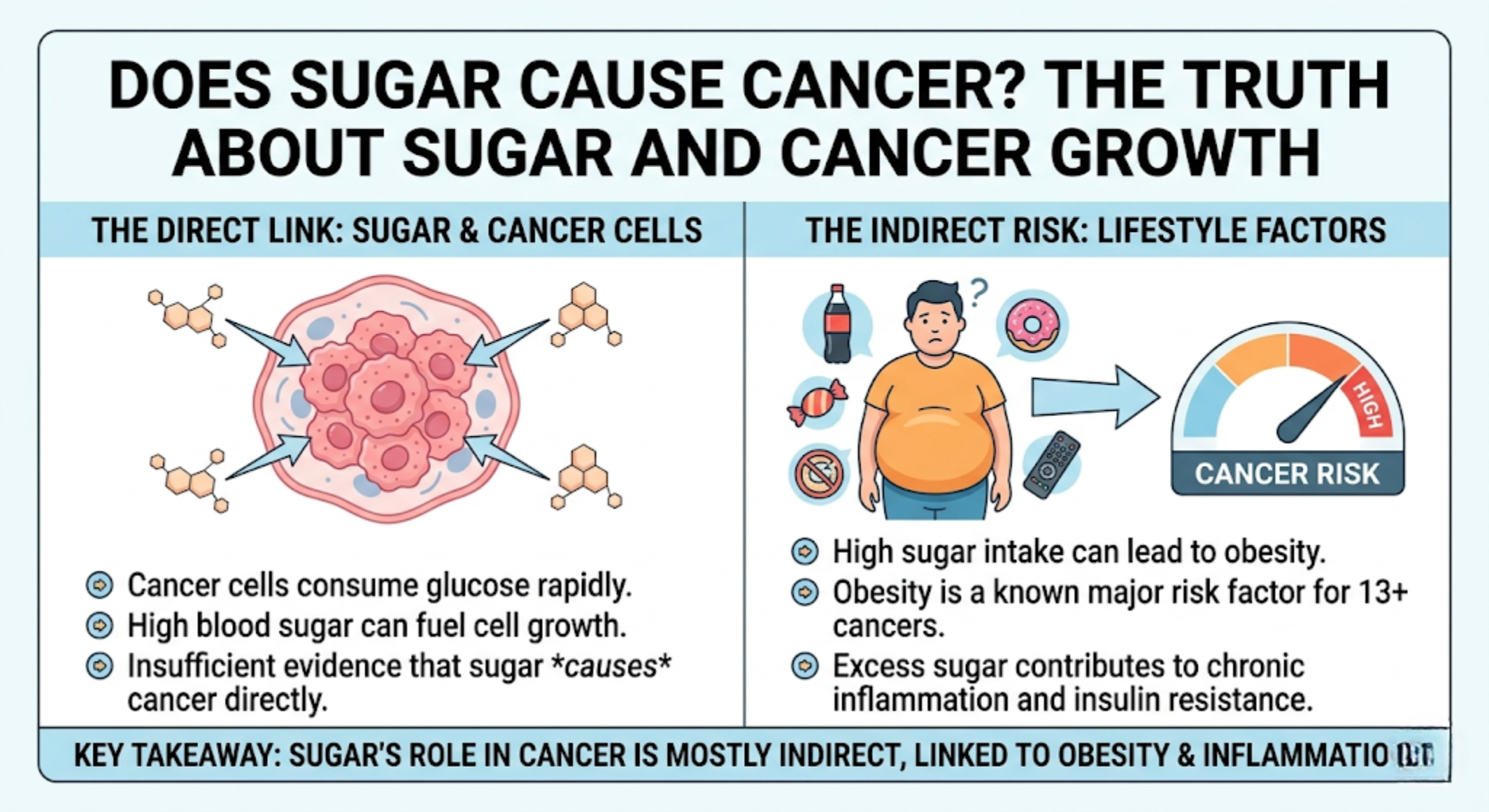
According to Dr. Asit Arora, sugar itself does not directly cause cancer. However, excessive sugar consumption can contribute to obesity, insulin resistance, and chronic inflammation — all of which increase the risk of several cancers.
In this blog, we will explore the relationship between sugar and cancer, separate myths from facts, and understand how a balanced diet plays an important role in cancer prevention.
Do Cancer Cells Feed on Sugar?
Yes, cancer cells use glucose (sugar) for energy. But so does every healthy cell in the human body.
Your brain, muscles, heart, and organs all need glucose to function properly. When you eat carbohydrates, your body breaks them down into glucose, which is then used as fuel.
The important thing to understand is this:
Completely avoiding sugar does not selectively starve cancer cells.
Even if you stop eating sugar entirely, your body still produces glucose naturally from proteins and fats because it needs energy to survive.
So, while cancer cells do consume glucose, simply cutting sugar out of your diet cannot stop cancer growth.
Then Why Is Sugar Linked to Cancer?
The connection between sugar and cancer is indirect.
Eating large amounts of sugary foods and drinks over time can lead to:
- Obesity
- High insulin levels
- Insulin resistance
- Type 2 diabetes
- Chronic inflammation
These conditions create an environment that may increase the risk of cancer development.
Research has shown that obesity is linked to several cancers, including:
- Colon cancer
- Pancreatic cancer
- Liver cancer
- Endometrial cancer
A diet high in processed sugars may also contribute to poor gut health and metabolic imbalance.
Simple Sugars vs Natural Sugars
Not all sugars are the same.
Simple and Processed Sugars
These are commonly found in:
- Soft drinks
- Cakes and pastries
- Candy
- Processed snacks
- Packaged juices
These foods often provide “empty calories” with little nutritional value.
Natural Sugars
Natural sugars are found in:
- Fruits
- Milk
- Vegetables
These foods also contain fiber, vitamins, minerals, and antioxidants that support overall health.
For example, fruits contain natural sugar but are still considered healthy because their fiber slows sugar absorption and supports digestion.
Can a Low-Sugar Diet Help Reduce Cancer Risk?
A healthy diet low in processed sugars may help reduce cancer risk indirectly by:
- Maintaining healthy body weight
- Improving insulin sensitivity
- Reducing inflammation
- Supporting gut health
- Preventing metabolic diseases
The goal is not to eliminate all carbohydrates or sugars but to maintain balance.
What Should You Eat Instead?
A cancer-prevention-friendly diet should include:
High-Fiber Foods
Fiber supports digestive health and may lower the risk of colorectal cancer.
Good sources include:
- Whole grains
- Fruits
- Vegetables
- Beans and lentils
Lean Proteins
Healthy protein sources include:
- Fish
- Eggs
- Pulses
- Lean meats
Healthy Fats
Include:
- Nuts
- Seeds
- Olive oil
- Avocados
Plenty of Water
Hydration supports overall body function and metabolism.
Lifestyle Habits Matter More Than One Ingredient
No single food causes or cures cancer.
Cancer risk is influenced by multiple factors, including:
- Smoking
- Alcohol consumption
- Obesity
- Physical inactivity
- Genetics
- Environmental exposure
- Diet quality
Focusing on overall lifestyle improvement is far more important than fearing one nutrient like sugar.
The Biggest Myth: “Sugar Feeds Cancer”
One of the most common misconceptions is that eating sugar makes cancer grow faster instantly.
The truth is:
- Cancer biology is extremely complex.
- The body tightly controls blood sugar levels.
- Completely removing sugar is neither practical nor medically proven to cure cancer.
Extreme diets may even lead to malnutrition, weakness, and muscle loss in cancer patients.
Always consult a qualified cancer specialist or nutrition expert before making major dietary changes.
Sugar alone does not directly cause cancer, but excessive sugar intake can contribute to obesity, inflammation, and metabolic disorders that increase cancer risk.
Instead of completely eliminating sugar, focus on:
- Eating a balanced diet
- Reducing processed foods
- Staying physically active
- Maintaining a healthy weight
- Following regular cancer screenings
Small lifestyle changes over time can make a significant difference in long-term health.
Frequently Asked Questions (FAQs)
Does eating sugar directly cause cancer?
No. Sugar itself does not directly cause cancer, but excess sugar intake can contribute to obesity and inflammation, which increase cancer risk.
Can cancer cells be starved by avoiding sugar?
No. All cells in the body need glucose for energy, and the body naturally produces glucose even if you stop eating sugar.
Should cancer patients completely avoid sugar?
Not necessarily. Cancer patients need balanced nutrition. Completely removing sugar without medical guidance may lead to nutritional deficiencies.
Are fruits bad because they contain sugar?
No. Fruits contain natural sugars along with fiber, vitamins, minerals, and antioxidants that support health.
What diet helps reduce cancer risk?
A balanced diet rich in fruits, vegetables, whole grains, lean proteins, and fiber may help reduce cancer risk.
If you have concerns about cancer prevention, digestive health, or cancer treatment options, consult an experienced GI and HPB cancer specialist.
Book a consultation with Dr. Asit Arora to learn more about evidence-based cancer care, early detection, and personalized treatment options.
Visit Dr. Asit Arora Official Website for expert guidance and appointments.