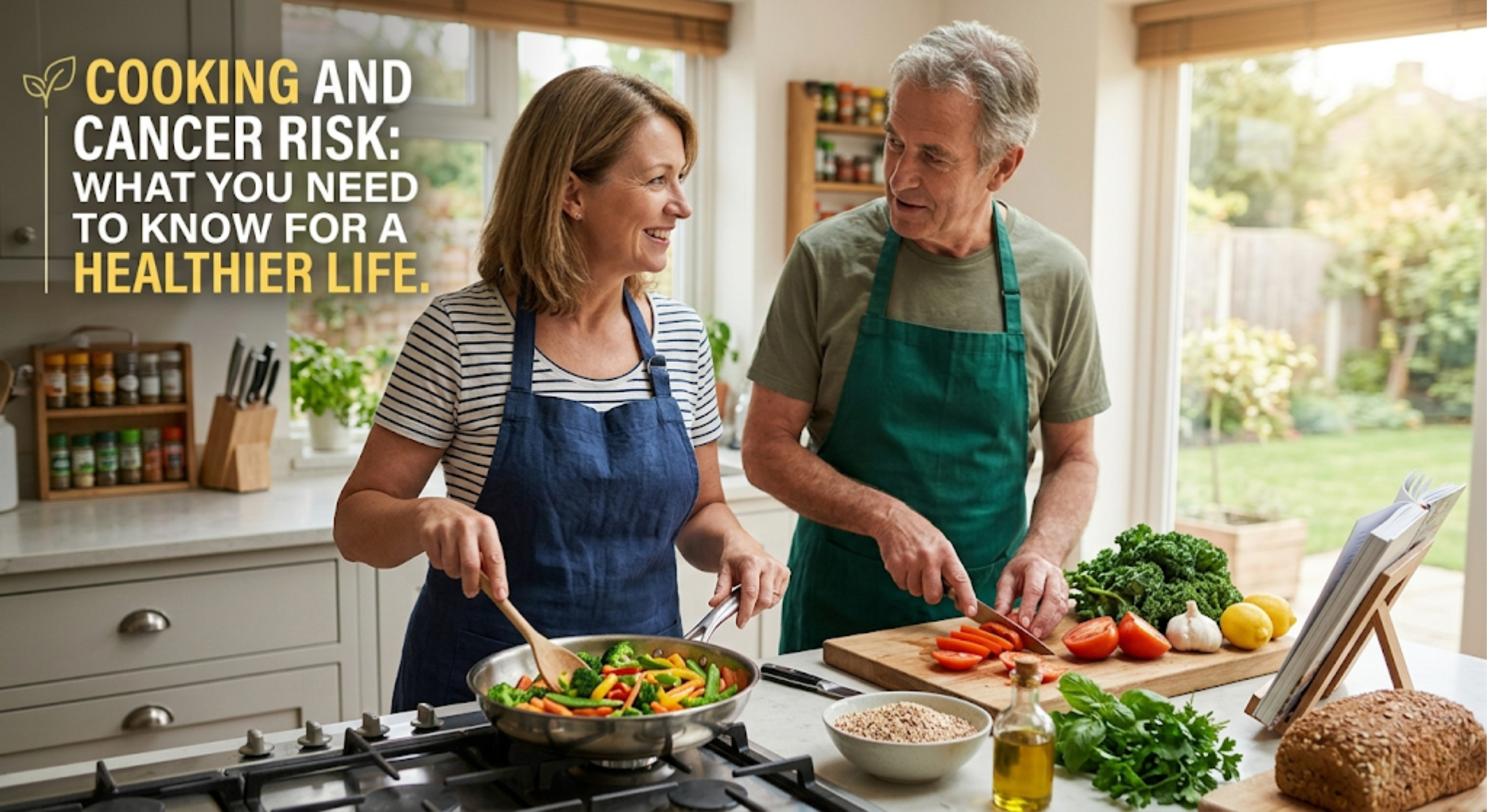
Cooking is a part of our daily lives. But do you know that how you cook your food can affect your cancer risk? The food you choose is important, but how you cook it is also crucial for your overall health. Some cooking methods that use very high temperatures can create harmful chemicals that are linked to cancer.
In this blog, Dr. Asit Arora explains how different cooking methods affect your health and shares tips on how to reduce cancer risk without giving up on taste.
How Cooking Affects Cancer Risk
When you cook foods, especially meat, at very high temperatures, harmful chemicals can form. There are two major types of chemicals linked to a higher cancer risk:
1. Heterocyclic Amines (HCAs)
These chemicals form when you cook meat like chicken, beef, or fish at high temperatures, especially during frying or grilling.
2. Polycyclic Aromatic Hydrocarbons (PAHs)
These chemicals form when fat and juices from meat drip onto flames and create smoke. The smoke then coats the food with harmful chemicals.
Studies suggest that long-term exposure to these chemicals may increase the risk of cancers such as Colon Cancer, Stomach Cancer, and Pancreatic Cancer.
Cooking Methods That May Increase Cancer Risk
Deep Frying
Deep frying uses very high temperatures that can create harmful chemicals in oils and food. Reusing cooking oil multiple times can make it even more harmful for your body.
Grilling Over Open Flame
When grilled meat becomes charred or burnt, it contains higher amounts of harmful chemicals. Occasional barbecues are generally fine, but frequent consumption of heavily charred food may not be healthy.
Pan Frying at High Heat
Cooking meat directly on high heat for long periods can increase the formation of chemicals linked to cancer risk.
Smoking and Processed Cooking Methods
Smoked meats and processed foods often contain preservatives and chemicals that may increase cancer risk over time.
Healthier Cooking Options
The good news is that you do not have to stop enjoying your favorite foods. Small changes in cooking methods can make a big difference.
Steaming
Steaming helps preserve nutrients in food without exposing it to excessive heat. It is considered one of the healthiest cooking methods.
Boiling and Poaching
These methods use lower temperatures and produce fewer harmful chemicals.
Baking and Roasting at Moderate Temperatures
Cooking food slowly at controlled temperatures can reduce the formation of harmful chemicals while maintaining flavor.
Air Frying
Air fryers use less oil and generally lower temperatures than deep frying, making them a healthier option.
Stir Frying with Minimal Oil
Cooking quickly on moderate heat with healthy oils can be safer than frying food at extremely high temperatures for long periods.
Tips to Reduce Cancer Risk While Cooking
Do Not Burn Your Food
Avoid eating blackened or charred portions of food. Remove burnt areas before eating.
Marinate Your Meat
Using marinades with lemon, curd, garlic, or herbs may help reduce the formation of harmful chemicals during cooking.
Cook at Lower Temperatures
Avoid cooking on extremely high flames whenever possible.
Use Fresh Oils
Do not reuse cooking oil repeatedly.
Add More Plant-Based Foods
Vegetables, fruits, legumes, and whole grains contain antioxidants that help protect your cells from damage.
Limit Processed Meats
Reducing processed and smoked meat consumption may lower your cancer risk.
The Bigger Picture: Lifestyle Matters Too
How you cook your food is only one part of cancer prevention. A healthy lifestyle overall has a much bigger impact on long-term health.
Important cancer prevention habits include:
- Maintaining a healthy weight
- Exercising regularly
- Avoiding smoking and limiting alcohol
- Eating a balanced, high-fiber diet
- Getting regular health checkups and screenings
No single food or cooking method directly causes cancer, but long-term habits can significantly affect your overall risk.
When Should You Be Concerned?
You should consult a doctor if you experience symptoms such as:
- Persistent stomach pain
- Unexplained weight loss
- Blood in the stool
- Ongoing indigestion
- Changes in bowel habits
- Difficulty swallowing
Early detection plays a crucial role in successful cancer treatment.
FAQ Section
Can Grilled Food Cause Cancer?
Eating grilled food occasionally is generally safe. However, frequently eating heavily charred meat may increase exposure to harmful chemicals linked to cancer risk.
Is Air Frying Healthier Than Deep Frying?
Yes. Air frying usually requires less oil and lower temperatures, which may reduce the formation of harmful compounds.
Does Burnt Food Increase Cancer Risk?
Burnt or blackened food may contain harmful chemicals. It is best to avoid eating burnt portions regularly.
Which Cooking Method Is the Healthiest?
Steaming, boiling, poaching, and baking at moderate temperatures are considered among the healthiest cooking methods.
Can Changing Cooking Methods Prevent Cancer Completely?
No single habit can completely prevent cancer. However, healthier cooking practices combined with a healthy lifestyle may help reduce overall cancer risk.
How we cook our food matters more than many people realize. High-temperature cooking methods like deep frying and excessive grilling can create harmful chemicals that may increase cancer risk over time. Fortunately, simple changes such as steaming, baking, air frying, and avoiding burnt food can help support a healthier lifestyle.
Being aware and making healthier choices in the kitchen can improve long-term health for you and your family.
If you have concerns about cancer prevention, gastrointestinal cancers, or digestive health, consult Dr. Asit Arora for expert guidance and personalized care. Early awareness, timely screenings, and healthy lifestyle choices can save lives.