
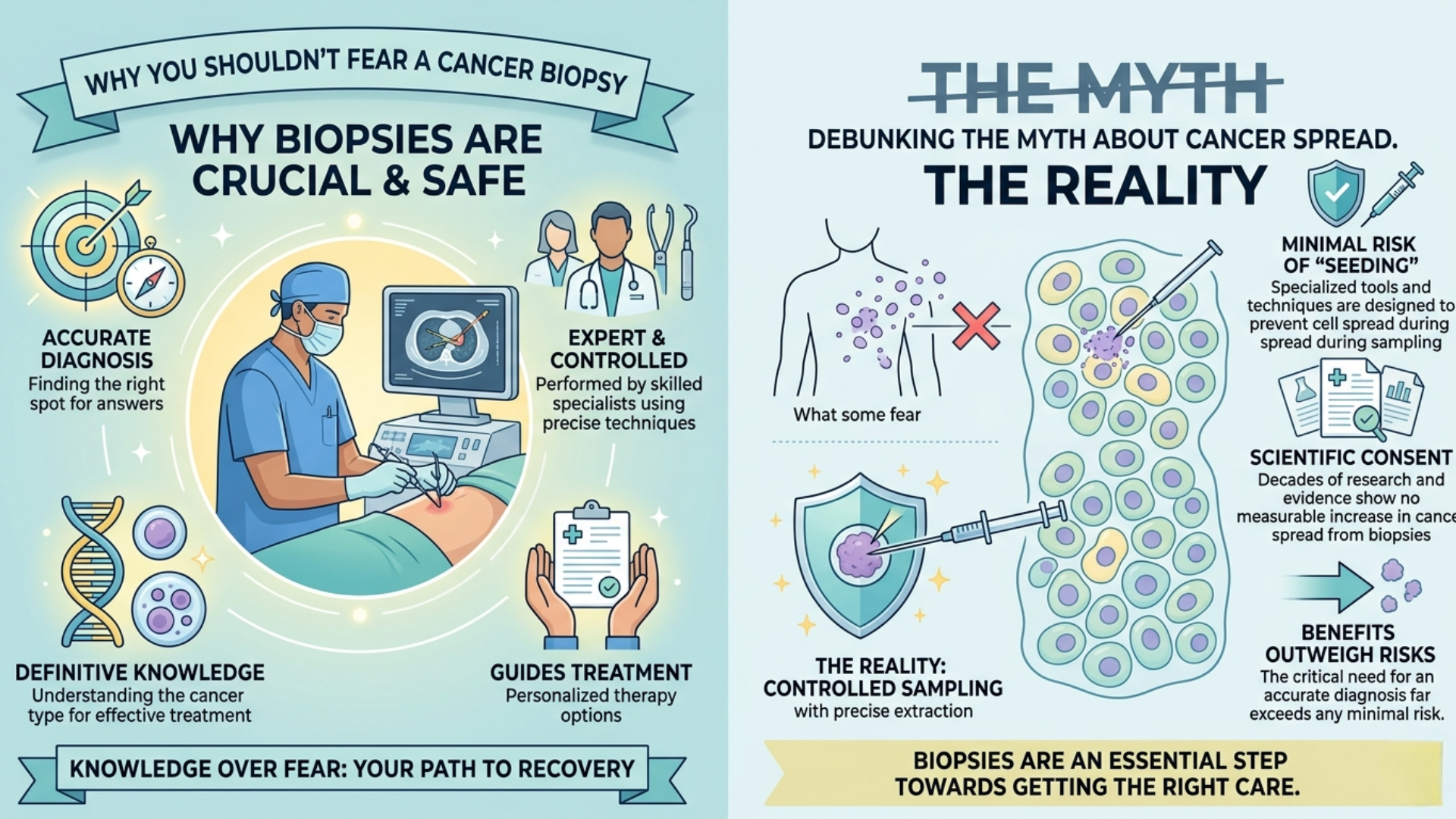
Hearing the word biopsy can be intimidating. One of the most common concerns patients express in the OPD is: “Will a biopsy cause my cancer to spread?”
This fear is understandable—but the good news is that it is largely a myth.
In this blog, we’ll break down the truth about cancer biopsies, why they are essential, and how modern medical techniques ensure they are both safe and life-saving.
What Is a Cancer Biopsy?
A biopsy is a medical procedure in which a small sample of tissue is taken from a suspicious area in the body. This sample is then examined under a microscope to determine:
- Whether cancer is present
- The type of cancer
- The grade and aggressiveness of the tumor
Without a biopsy, doctors are essentially making educated guesses. With it, they can create a precise and personalized treatment plan.
Does a Biopsy Cause Cancer to Spread?
The Short Answer: No
The idea that a biopsy spreads cancer is a long-standing myth not supported by scientific evidence.
Why This Myth Exists:
- Fear of “disturbing” the tumor
- Misinterpretation of rare, older medical cases
- General anxiety around cancer procedures
The Reality:
Modern biopsy techniques are designed to minimize any risk of tumor spread. In fact, the benefits of getting an accurate diagnosis far outweigh any theoretical risks.
How Modern Biopsies Are Safe
Today’s biopsies are performed using advanced, image-guided technologies that ensure precision and safety:
1. Fine Needle Aspiration (FNA)
- Uses a very thin needle
- Minimally invasive
- Low risk of complications
2. Core Needle Biopsy
- Provides a slightly larger tissue sample
- Essential for detailed diagnosis
3. Image-Guided Biopsy
- Uses ultrasound or CT scan guidance
- Ensures the needle goes exactly where needed
- Avoids unnecessary tissue disturbance
These techniques ensure that:
- The tumor is accessed accurately
- Surrounding tissues are protected
- The chance of spread is extremely rare
Why a Biopsy Is Crucial for Cancer Treatment
Skipping a biopsy can lead to incorrect or delayed treatment. A biopsy helps in:
✔ Confirming the Diagnosis
Not all lumps are cancer. A biopsy provides clarity.
✔ Identifying Cancer Type
Different cancers require different treatments.
✔ Planning Targeted Therapy
Modern cancer care is highly personalized—biopsy results guide:
- Surgery decisions
- Chemotherapy
- Targeted therapy
- Immunotherapy
✔ Avoiding Unnecessary Treatment
Without a biopsy, patients may undergo treatments they don’t need.
Are There Cases Where Biopsy Is Avoided?
Yes, in certain specific and rare situations, doctors may avoid a biopsy, such as:
- Certain ovarian tumors
- Testicular tumors (where surgery is preferred directly)
In these cases, the decision is based on well-established medical protocols to ensure the best outcome for the patient.
Common Myths vs Facts
| Myth | Fact |
| Biopsy spreads cancer | Modern biopsies do not cause cancer spread |
| Biopsy is very painful | Most biopsies are minimally invasive |
| You can skip biopsy and start treatment | Treatment without diagnosis can be dangerous |
| Biopsies are risky | They are routine and safe procedures |
Frequently Asked Questions (FAQs)
1. Is a biopsy painful?
Most biopsies are done under local anesthesia. You may feel mild discomfort, but it is generally well-tolerated.
2. How long does a biopsy take?
Typically, the procedure takes 15–30 minutes, depending on the type and location.
3. How long do results take?
Results are usually available within 2–5 days, depending on the tests required.
4. Can a biopsy give a wrong result?
Biopsies are highly accurate. In rare cases, a repeat biopsy may be needed if the sample is insufficient.
5. Is it safe for all types of cancers?
Yes, biopsies are safe for most cancers. In rare exceptions, doctors may choose alternative approaches.
Final Thoughts
A biopsy is not something to fear—it is a powerful diagnostic tool that plays a critical role in saving lives. Avoiding it due to myths or misinformation can delay treatment and affect outcomes.
Modern medicine has made biopsies safe, precise, and indispensable in cancer care.
If you or your loved one has been advised a biopsy, don’t delay due to fear or myths. Early and accurate diagnosis is the first step toward effective treatment.
👉 Consult a qualified cancer specialist today to understand your condition better and take the right next step.
👉 For expert guidance and personalized cancer care, book an appointment with an experienced GI & HPB surgical oncologist.