
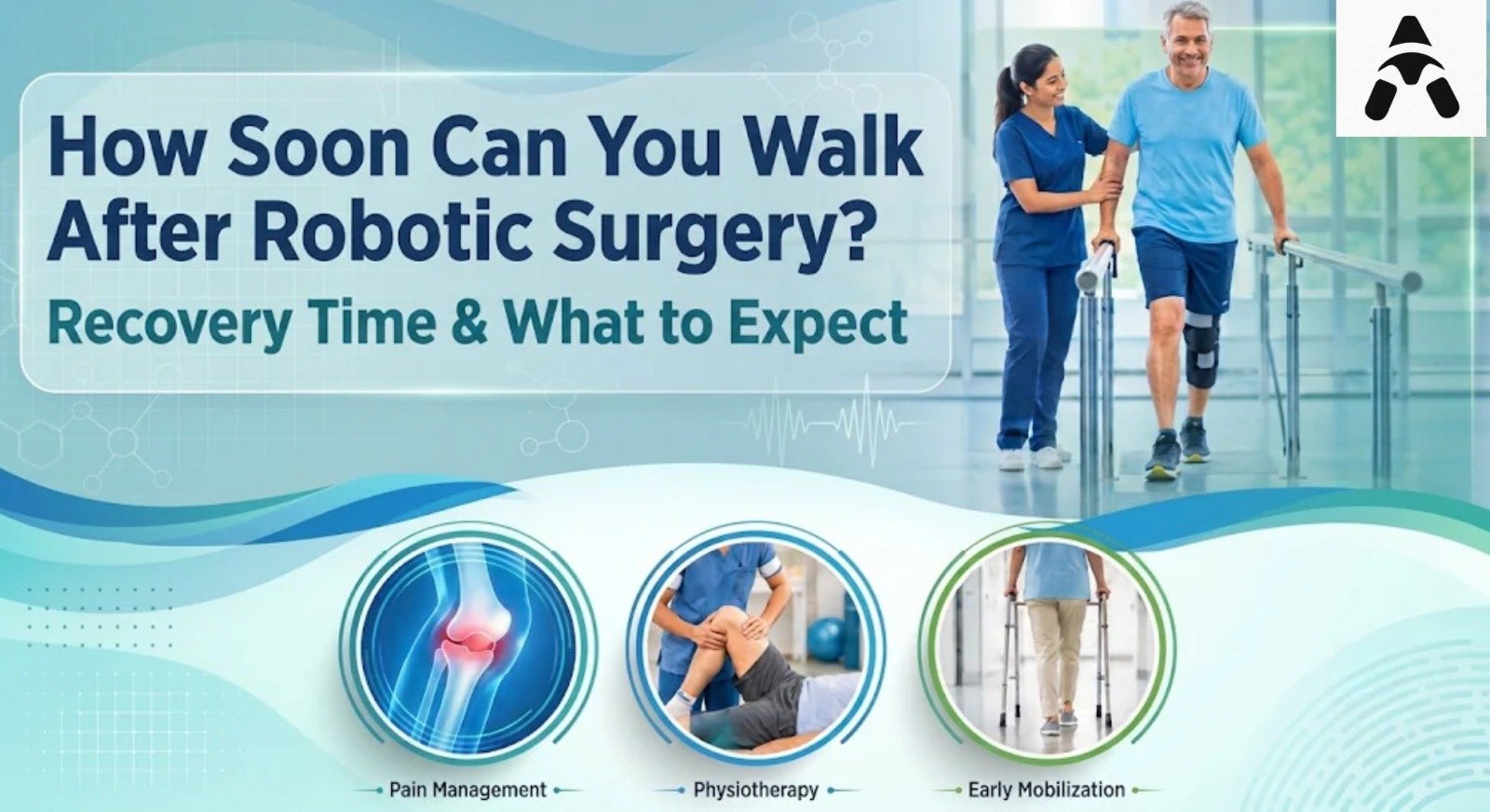
Robotic surgery is becoming an important option for treating several medical conditions, including certain types of cancer. But if you or someone in your family is preparing for robotic surgery, one question probably comes to mind: How soon can I get out of bed and start walking again?
How Soon Can You Walk After Robotic Surgery? Recovery Time & What to Expect
Robotic surgery is becoming an important option for treating several medical conditions, including certain types of cancer. But if you or someone in your family is preparing for robotic surgery, one question probably comes to mind: How soon can I get out of bed and start walking again?
It is completely natural to feel nervous about moving after an operation. You may worry that walking could hurt your stitches, increase pain, or affect your recovery. The good news is that, in many cases, patients are encouraged to start walking much earlier than they expect.
In fact, gentle walking is often an important part of recovery after robotic surgery. Let's understand when you can start walking, what your recovery timeline may look like, and how to make the healing process more comfortable.
How Soon Can You Walk After Robotic Surgery?
Most patients can begin assisted walking within a few hours or by the first day after robotic surgery, depending on the procedure, anaesthesia recovery, and overall health.
Your surgical team may first help you sit up, stand beside the bed, and take a few steps with support. You do not need to walk long distances immediately. Even a short walk around your hospital room can be a positive start.
Robotic surgery generally uses small incisions and specialised instruments controlled by the surgeon. However, the actual recovery depends on what operation you have undergone.
For example, recovery after robotic prostate surgery may differ from recovery after robotic stomach or colon cancer surgery.
Remember: Your surgeon's instructions always come first. Never force yourself to walk if you feel dizzy, breathless, or unusually uncomfortable.
What Is Robotic Surgery and Why Is Recovery Different?
Robotic surgery is a type of minimally invasive surgery in which a surgeon controls specialised robotic instruments from a console. A high-definition camera provides a magnified view of the surgical area, helping the surgeon perform precise movements.
Think of it like using a highly advanced tool that allows the surgeon to operate through small openings rather than making a large incision in many procedures.
Why Do Doctors Recommend Robotic Surgery?
Depending on the condition and the patient's suitability, robotic surgery may offer:
- Smaller surgical incisions compared with traditional open surgery.
- Less damage to surrounding tissues in suitable procedures.
- Reduced blood loss in some operations.
- Less postoperative pain for some patients.
- Shorter hospital stays in selected cases.
- An earlier return to everyday activities for some patients.
However, robotic surgery is not automatically better for every patient. The benefits depend on the type of operation, the surgeon's experience, and the patient's medical condition.
Robotic Surgery Recovery Timeline: When Can You Start Walking?
Every patient heals differently, but the following timeline gives you a general idea of what recovery may involve.
First 24 Hours After Surgery
Your medical team will monitor your blood pressure, breathing, pain, and overall condition after surgery.
Once you are stable, nurses or physiotherapists may help you:
- Sit on the edge of your bed.
- Stand with assistance.
- Take a few gentle steps.
- Use the washroom if permitted.
You may feel tired, slightly dizzy, or uncomfortable because of anaesthesia and medication. This is why initial walking should always happen with assistance.
1–3 Days After Surgery
Many patients gradually increase their walking during this period.
You may be able to walk around your hospital room or corridor with less support. Your doctor may also encourage breathing exercises and gentle leg movements.
If your recovery is progressing well, you may be discharged according to your procedure and hospital protocol.
1–2 Weeks After Surgery
Once you return home, short and frequent walks may help you regain strength.
You should avoid pushing yourself too hard. Start with comfortable distances and increase them gradually, following your doctor's advice.
3–6 Weeks After Surgery
Many patients experience noticeable improvements in their energy and mobility during this period.
Depending on the operation, you may gradually return to more everyday activities. Heavy lifting, strenuous exercise, and abdominal strain may still be restricted.
Some major cancer operations require a longer recovery period.
Why Is Walking Important After Robotic Surgery?
Walking is not just about getting back on your feet. It is an important part of postoperative care.
After surgery, spending too much time in bed can increase the risk of certain complications. Gentle movement helps your body gradually return to normal functioning.
Here are some important benefits:
1. Improves Blood Circulation
Walking encourages blood flow through your legs and helps reduce the risk of blood clots, although additional preventive measures may also be necessary.
2. Supports Better Breathing
Deep breathing and gentle movement help your lungs expand. This is particularly important after general anaesthesia.
3. Helps Your Digestive System
After abdominal surgery, the digestive system may take time to become active again. Gentle walking can support the return of normal bowel movement.
4. Reduces Muscle Weakness
Staying in bed for long periods can weaken muscles. Short walks help maintain strength and mobility.
5. Supports Overall Recovery
Gradually increasing physical activity can improve confidence and help you return to your daily routine.
What Factors Affect Walking Recovery After Robotic Surgery?
Not everyone starts walking at the same time. Several factors can influence how quickly you become comfortable moving around.
- Type of surgery: Robotic stomach, colon, prostate, and gynaecological procedures have different recovery requirements.
- Overall health: Existing medical conditions can influence healing and mobility.
- Age and physical fitness: Muscle strength and general fitness may affect recovery.
- Surgical complexity: More extensive procedures may require additional recovery time.
- Pain management: Properly controlled pain can make gentle movement easier.
- Postoperative complications: Infection, bleeding, or other complications may delay mobilisation.
Your surgeon will consider these factors before recommending an activity schedule.
How to Walk Safely After Robotic Surgery
Starting slowly is the best approach. You do not need to achieve a particular distance or speed during the first few days.
Follow these practical tips:
- Start with assistance: Take your first steps with a nurse, physiotherapist, or family member when permitted.
- Keep walks short: Begin with a few minutes and gradually increase your walking time.
- Avoid sudden movements: Stand up slowly to reduce the possibility of dizziness.
- Wear comfortable footwear: Use supportive, non-slip footwear when walking.
- Stay hydrated: Drink fluids according to your doctor's instructions.
- Listen to your body: Stop and rest if you feel tired or uncomfortable.
- Avoid heavy lifting: Do not lift heavy objects until your surgeon gives permission.
When Should You Contact Your Doctor?
Mild discomfort and tiredness can occur after surgery, but certain symptoms should never be ignored.
Contact your medical team if you experience:
- Increasing or severe abdominal pain.
- Fever or chills.
- Redness, swelling, or discharge around an incision.
- Persistent vomiting.
- Difficulty passing urine.
- Increasing wound bleeding.
Seek emergency medical attention if you experience sudden breathlessness, chest pain, fainting, or significant coughing up of blood.
Meet Your Surgical Expert: Dr. Asit Arora
Dr. Asit Arora is associated with Apollo Hospitals, Delhi, and provides oncological care for patients requiring evaluation and treatment of cancers, including stomach cancer and colon cancer.
Cancer surgery can be an emotionally challenging experience for patients and their families. Understanding the procedure, expected recovery, and possible treatment options can make the journey less overwhelming.
The choice of surgical approach depends on the cancer type, its stage, the patient's health, and the expected treatment benefits. Robotic surgery may be considered in suitable cases following a detailed medical assessment.
Your Robotic Surgery Recovery: A Simple Checklist
| Recovery Stage | What You May Expect |
|---|---|
| First few hours | Monitoring and initial recovery from anaesthesia |
| First 24 hours | Sitting, standing, and assisted walking if stable |
| Days 1–3 | Gradually increasing short walks |
| Weeks 1–2 | Gentle movement and home recovery |
| Weeks 3–6 | Gradual return to daily activities, depending on the procedure |
| Beyond 6 weeks | Further activity progression with medical clearance |
This is a general guide, not a fixed recovery schedule. Major cancer operations may require additional healing time.
Frequently Asked Questions
1. Can I walk on the same day after robotic surgery?
Yes, some patients can walk a few steps on the same day after robotic surgery. Your medical team will decide when it is safe based on your condition, anaesthesia recovery, and the type of operation.
2. How many days does it take to walk normally after robotic surgery?
Many patients gradually become more comfortable walking over the first few days. However, returning to completely normal walking depends on the surgical procedure, pain levels, and individual healing.
3. Is walking painful after robotic surgery?
Walking may cause mild discomfort or tightness around the incision areas initially. However, gentle movement is generally encouraged when approved by your surgeon. Pain that becomes severe or progressively worse needs medical attention.
4. Can walking help prevent complications after robotic surgery?
Yes, early mobilisation can help reduce the risk of blood clots and support lung function and bowel recovery. However, walking is only one part of postoperative care, and some patients also need medication or other preventive measures.
5. When can I climb stairs after robotic surgery?
Some patients can climb a few steps with assistance when medically cleared. Start slowly, use a handrail, and avoid repeated stair climbing until your surgeon confirms it is safe.
6. When can I return to work after robotic surgery?
The return-to-work timeline varies depending on the procedure, job responsibilities, and recovery progress. People with desk jobs may return earlier than those whose work involves lifting, standing, or physical activity. Always seek medical clearance before resuming work.
Consult Dr. Asit Arora at Apollo Hospitals, Delhi
If you are preparing for robotic surgery or recovering after an operation, the right medical guidance can help you understand what to expect at every stage.
Do not compare your recovery with someone else's. Your treatment plan should be based on your diagnosis, surgical procedure, and overall health.
Book a Consultation
Doctor: Dr. Asit Arora
Hospital: Apollo Hospitals, Delhi
Address: OPD – 67, Apollo Hospital, NH-19, Jasola Vihar, New Delhi, Delhi – 110020, India.
Call: 098212 16022