

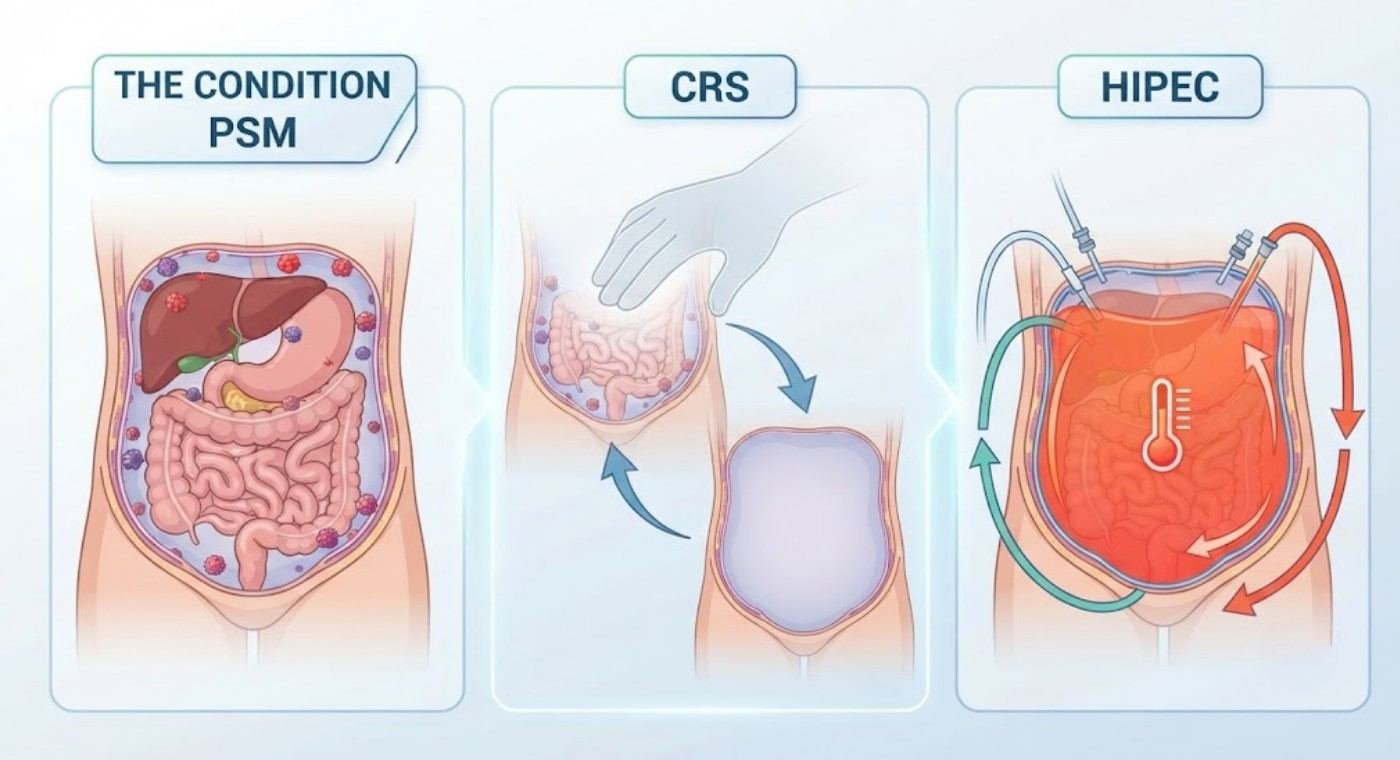
CRS, HIPEC & PSM
Advanced Treatment for Cancers Spread to the Peritoneum
When cancer spreads to the lining of the abdomen, known as the peritoneum, treatment can become more complex. In carefully selected patients, a specialised approach called Cytoreductive Surgery (CRS) combined with Hyperthermic Intraperitoneal Chemotherapy (HIPEC) may be considered.
At [Doctor/Hospital Name], CRS and HIPEC are performed as part of a multidisciplinary approach to managing selected peritoneal surface malignancies (PSM). The treatment aims to remove visible tumour deposits from the abdominal cavity and deliver chemotherapy directly inside the abdomen to target remaining microscopic cancer cells.
What Are Peritoneal Surface Malignancies?
Peritoneal surface malignancies (PSM) are cancers that involve the peritoneum, the thin lining that covers the abdominal organs and inner abdominal wall.
Peritoneal involvement may occur as a primary cancer or when another cancer spreads to the peritoneum. Conditions that may be evaluated for CRS and HIPEC include:
- Colorectal cancer with peritoneal metastases
- Appendiceal cancers and pseudomyxoma peritonei (PMP)
- Gastric cancer with selected peritoneal spread
- Primary peritoneal malignancies
- Selected ovarian and other abdominal cancers
- Peritoneal mesothelioma
- Other carefully selected peritoneal surface tumours
Not every patient with peritoneal spread is suitable for CRS and HIPEC. A detailed assessment is essential before deciding whether this treatment is appropriate.
What Is Cytoreductive Surgery (CRS)?
Cytoreductive Surgery (CRS) is a major abdominal operation performed to remove as much visible cancer as possible from the peritoneal cavity.
Depending on where the disease is located and how extensively it has spread, surgery may involve removing tumour deposits from the peritoneum and, when necessary, affected portions of nearby organs.
The goal is complete or near-complete removal of visible tumour, whenever this can be safely achieved.
Because CRS can be extensive, careful preoperative evaluation and planning are important.
What Is HIPEC?
HIPEC stands for Hyperthermic Intraperitoneal Chemotherapy.
After the visible tumour has been removed during CRS, heated chemotherapy is circulated directly within the abdominal cavity for a specific period.
This approach allows chemotherapy to be delivered directly to the area where microscopic cancer cells may remain. The combination of surgery and regional chemotherapy is designed to address both visible and microscopic disease.
HIPEC is different from conventional intravenous chemotherapy because the chemotherapy is administered directly into the abdominal cavity during the surgical procedure.
How Do CRS and HIPEC Work Together?
CRS and HIPEC are generally performed during the same surgical treatment.
Step 1: Evaluation and staging
The patient's medical history, imaging, pathology reports and overall health are reviewed to determine the extent of disease and suitability for treatment.
Step 2: Cytoreductive Surgery
Visible tumour deposits within the abdominal cavity are carefully removed.
Step 3: HIPEC
After tumour removal, heated chemotherapy is circulated within the abdominal cavity to treat microscopic cancer cells that may remain.
Step 4: Completion and recovery
The chemotherapy is drained, the abdominal cavity is managed appropriately, and the surgical procedure is completed. The patient is then monitored closely during recovery.
Who May Be Considered for CRS & HIPEC?
CRS and HIPEC are not suitable for every patient with peritoneal cancer.
A patient may be considered based on factors such as:
- Type and origin of the cancer
- Extent and distribution of peritoneal disease
- Whether the visible disease can potentially be removed completely or almost completely
- Overall health and fitness for major surgery
- Response to previous treatments
- Presence and extent of disease outside the abdomen
- Results of imaging, pathology and other investigations
A specialist team evaluates these factors before recommending treatment.
Why Is Patient Selection Important?
CRS and HIPEC can be complex procedures involving major abdominal surgery. The potential benefits need to be carefully weighed against the risks.
Assessment may include imaging scans, blood tests, pathology review, evaluation of previous treatments and, in selected cases, diagnostic laparoscopy.
A multidisciplinary team may include a surgical oncologist, medical oncologist, radiologist, pathologist, anaesthetist, critical-care team and other specialists.
What Are the Potential Benefits?
For appropriately selected patients, CRS and HIPEC may offer an important treatment option for certain cancers involving the peritoneum.
Potential benefits can include:
- Removal of visible tumour within the abdominal cavity
- Direct delivery of chemotherapy to the peritoneal cavity
- Treatment of microscopic residual disease
- Potential improvement in disease control for selected patients
- An opportunity for long-term survival in appropriately selected cases
The expected benefit varies considerably depending on the cancer type, disease burden, tumour biology and completeness of tumour removal.
Recovery After CRS & HIPEC
Recovery after CRS and HIPEC varies from patient to patient because the extent of surgery can be substantial.
During recovery, the medical team monitors:
- Pain and wound healing
- Nutrition and hydration
- Bowel and bladder function
- Blood counts and organ function
- Risk of infection
- Other postoperative complications
Patients may need several weeks to gradually return to their normal routine. Follow-up appointments and ongoing cancer surveillance remain an important part of care.
Possible Risks and Complications
Like any major cancer surgery, CRS and HIPEC can have risks.
Depending on the individual procedure, possible complications may include:
- Infection
- Bleeding
- Blood clots
- Bowel or digestive complications
- Leakage from surgical connections
- Temporary or prolonged changes in bowel function
- Fluid and electrolyte abnormalities
- Kidney or other organ-related complications
- Delayed recovery
- Need for additional treatment or procedures
Your surgeon will discuss the expected benefits, limitations and potential risks based on your individual condition.
Why Choose a Specialist CRS & HIPEC Team?
CRS and HIPEC require detailed planning, complex surgical expertise and coordinated postoperative care.
An experienced multidisciplinary team can help evaluate whether this treatment is appropriate, plan the surgical approach, manage potential complications and coordinate cancer treatment before and after surgery.
Frequently Asked Questions
Yes. HIPEC is a form of regional chemotherapy in which heated chemotherapy is circulated directly inside the abdominal cavity during surgery.
No. CRS is the surgical removal of visible tumour deposits, while HIPEC involves circulating heated chemotherapy inside the abdomen. They are commonly combined in selected patients.
The duration varies significantly depending on the extent of disease and the organs or tissues involved. Your surgical team can provide a more individualised estimate after evaluation.
Some patients may require additional systemic cancer treatment before or after surgery. This depends on the cancer type, stage, previous treatment and overall treatment plan.
A specialist evaluation is required. Your medical records, pathology, imaging scans, previous treatments, overall health and extent of peritoneal disease will be reviewed before making a recommendation.