

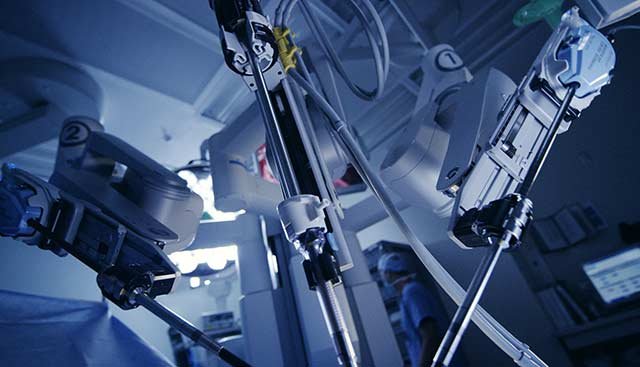
Robotic Esophagectomy is an advanced minimally invasive surgical procedure used primarily to treat selected cancers and other serious conditions affecting the esophagus. The procedure involves removing the diseased portion of the esophagus, along with surrounding tissues and regional lymph nodes when indicated, and reconstructing the digestive tract to restore the passage of food. Robotic technology provides enhanced visualization and precise instrument control, making it particularly useful for complex surgery within the chest and upper abdomen.
The esophagus is a muscular tube that carries food and liquids from the throat to the stomach. Esophageal cancer can develop in different parts of this organ and may require a combination of treatments, including chemotherapy, radiation therapy, and surgery. When surgery is appropriate, esophagectomy may provide an important part of definitive treatment for selected patients.
Robotic Esophagectomy is performed through several small incisions rather than a large open incision. A high-definition, three-dimensional camera and specialized robotic instruments are introduced through these openings. The surgeon controls the robotic system from a console, allowing precise movements during dissection and reconstruction.
How Robotic Esophagectomy Is Performed
Robotic Esophagectomy is a complex operation that may involve the chest and abdomen, depending on the surgical technique and location of the tumor. The exact approach is selected according to the tumor’s location, stage, patient anatomy, and overall health.
During the abdominal portion of the procedure, the stomach is carefully mobilized while preserving its blood supply. The stomach is then prepared to create a narrow tube, commonly called a gastric conduit, which can later be brought upward to replace the removed portion of the esophagus.
During the chest portion, the surgeon accesses the thoracic cavity using minimally invasive techniques. The diseased section of the esophagus is carefully separated from surrounding structures. Regional lymph nodes and surrounding tissues are removed when required as part of the cancer operation.
After the affected esophagus has been removed, the prepared stomach conduit is brought into the chest or neck depending on the surgical technique. The stomach is then connected to the remaining healthy esophagus to create an anastomosis. This reconstruction allows food to pass from the esophagus into the stomach and digestive tract.
Robotic Esophagectomy for Esophageal Cancer
For patients with esophageal cancer, surgery is generally considered after detailed staging and multidisciplinary evaluation. The treatment plan may involve chemotherapy, radiation therapy, immunotherapy, or combinations of these treatments before or after surgery, depending on the type and stage of cancer.
Preoperative treatment may help reduce tumor burden, treat microscopic disease, and improve the effectiveness of surgery in selected patients. The exact treatment strategy depends on the tumor location, histological type, stage, molecular characteristics, and overall health.
Robotic Esophagectomy may be considered for appropriately selected patients when the tumor can be safely removed through a minimally invasive approach.
Lymph Node Removal
Removal and examination of regional lymph nodes are important components of esophageal cancer surgery. Esophageal cancer can spread through the lymphatic system, and assessment of lymph nodes provides valuable information regarding the stage and biological behavior of the disease.
During Robotic Esophagectomy, lymph nodes may be removed from the chest and abdomen according to the tumor location and surgical approach. The removed tissues are sent for detailed pathological examination.
The pathology results help determine the final stage of the cancer, assess surgical margins, evaluate treatment response, and guide decisions regarding additional therapy and long-term surveillance.
Robotic Technology in Esophageal Surgery
The esophagus is located in a complex anatomical region surrounded by important structures, including the lungs, heart, major blood vessels, airway, nerves, and lymphatic tissues. The robotic platform provides a magnified three-dimensional view of the surgical field and allows the use of articulated instruments that can perform controlled movements within confined spaces.
These features can assist with precise dissection around the esophagus and nearby structures. Robotic instruments may also facilitate lymph node removal, tissue handling, and reconstruction of the digestive tract.
The robotic system does not perform the surgery independently. The surgeon remains in complete control of the operation and uses the robotic platform to perform precise minimally invasive surgical movements.
Potential Benefits of the Robotic Approach
In appropriately selected patients, Robotic Esophagectomy may offer potential benefits associated with minimally invasive surgery. These may include smaller incisions, reduced postoperative pain, less blood loss, reduced trauma to the chest and abdominal wall, earlier mobilization, and potentially shorter recovery compared with conventional open surgery.
The magnified three-dimensional view and flexible robotic instruments may be particularly useful during dissection in the chest and upper abdomen, where access can be technically challenging.
However, esophagectomy remains a major and complex operation regardless of the surgical approach. The choice between robotic, laparoscopic, conventional open, or hybrid techniques depends on the patient’s tumor characteristics, anatomy, previous treatment, general health, and the experience of the surgical team.