

Robotic Ultra-Low Anterior Resection is an advanced minimally invasive surgical procedure used primarily to treat selected cancers and other diseases affecting the very lower part of the rectum. The procedure involves removing the diseased portion of the rectum along with the surrounding mesorectal tissue and regional lymph nodes when indicated, while preserving the anal sphincter and restoring the continuity of the digestive tract whenever it is technically and oncologically safe to do so.
Ultra-Low Anterior Resection is particularly relevant for tumors located very close to the anal canal. The procedure is technically more demanding than a conventional low anterior resection because surgery is performed deep within the narrow pelvic cavity, close to the anal sphincter, pelvic floor muscles, urinary structures, reproductive organs, and important nerves. Robotic technology can provide enhanced visualization and instrument control, supporting precise dissection in this challenging anatomical region.
How Robotic Ultra-Low Anterior Resection Is Performed
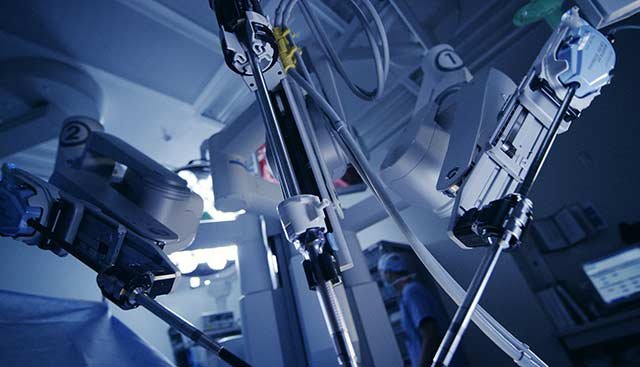
The procedure is performed under general anesthesia through several small abdominal incisions. A high-definition, three-dimensional camera and specialized robotic instruments are inserted through these openings. The surgeon controls the robotic system from a console, directing the instruments with precise movements throughout the operation.
The colon and rectum are carefully mobilized, and the blood vessels supplying the affected bowel are managed according to the planned oncological resection. The surgeon then performs meticulous dissection within the pelvis, following the appropriate anatomical planes around the rectum.
For rectal cancer, the procedure generally incorporates the principles of Total Mesorectal Excision (TME) when appropriate. The rectum and surrounding mesorectal tissue are carefully separated from the pelvic structures while attempting to preserve important nerves and surrounding organs. This approach is designed to achieve adequate tumor clearance and reduce the risk of leaving microscopic disease behind.
Because the tumor is located very low in the rectum, the final division of the rectum may be performed close to the anal sphincter. Depending on the tumor’s exact location and relationship with the sphincter complex, a very low colorectal or coloanal anastomosis may be created to reconnect the bowel.
Sphincter Preservation
One of the principal goals of Robotic Ultra-Low Anterior Resection is preservation of the anal sphincter. When the tumor does not involve the sphincter and adequate cancer margins can be achieved, preserving the sphincter may allow the patient to continue passing stool through the natural route and avoid a permanent colostomy.
However, sphincter preservation is not suitable for every patient. The decision depends on the exact location and extent of the tumor, involvement of the sphincter or pelvic floor, response to preoperative treatment, functional considerations, and the ability to achieve appropriate oncological margins. If safe tumor removal cannot be achieved while preserving the sphincter, an alternative procedure such as Abdominoperineal Resection may be recommended.
Robotic Technology in Ultra-Low Rectal Surgery
The lower pelvis presents a technically challenging environment because of its limited working space and complex anatomy. Robotic technology provides a magnified three-dimensional view of the surgical field and allows the use of articulated instruments that can move with precision within the pelvis.
These features can assist the surgeon during delicate dissection around the rectum, pelvic nerves, blood vessels, and sphincter complex. Robotic technology may also facilitate precise suturing and reconstruction when creating a very low bowel connection.
The robotic system does not perform the operation independently. The surgeon maintains direct control of the procedure and uses the robotic platform as an advanced tool to perform complex minimally invasive surgery.