

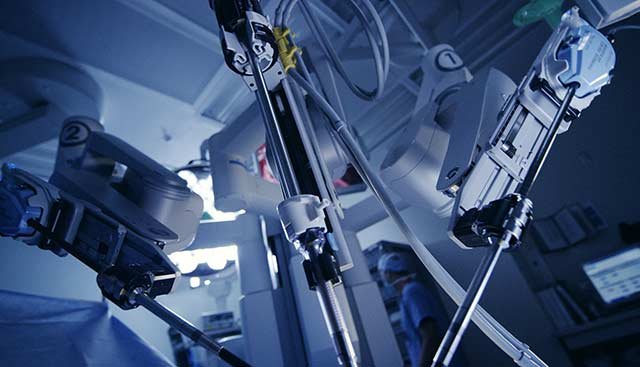
Robotic Radical Cholecystectomy is an advanced minimally invasive surgical procedure primarily used in the treatment of selected gallbladder cancers. Unlike a standard cholecystectomy, which removes only the gallbladder, a radical cholecystectomy involves removal of the gallbladder along with a portion of the adjacent liver tissue and regional lymph nodes. The extent of surgery is determined by the location, depth, and stage of the tumor and is carefully planned to achieve appropriate cancer clearance while preserving healthy liver tissue and surrounding structures whenever possible.
The robotic approach combines established hepatobiliary cancer surgery with advanced robotic technology. The procedure is performed through several small abdominal incisions using a robotic surgical system equipped with a high-definition, magnified three-dimensional camera and specialized articulated instruments. These features can provide enhanced visualization and precise instrument control during complex dissection around the gallbladder, liver, bile ducts, blood vessels, and regional lymph nodes.
Why Robotic Radical Cholecystectomy Is Performed
Gallbladder cancer can sometimes be discovered unexpectedly after a routine gallbladder removal performed for presumed benign gallstone disease. Depending on the depth of tumor invasion and other pathological findings, additional surgery may be recommended to achieve adequate removal of the disease.
For patients with gallbladder cancer that has invaded beyond the innermost layers of the gallbladder wall but remains potentially removable, a radical cholecystectomy may be considered. The procedure is designed to remove the gallbladder and the surrounding tissues that may contain microscopic tumor cells.
The exact extent of surgery varies from patient to patient. It may involve removal of a portion of the liver immediately adjacent to the gallbladder bed, together with regional lymph node dissection. In more advanced but potentially resectable disease, additional bile duct or adjacent organ resection may occasionally be required.
How Robotic Radical Cholecystectomy Is Performed
The procedure is performed under general anesthesia. Several small incisions are created in the abdomen to allow placement of the robotic camera and instruments. The surgeon controls the robotic system from a console while viewing a magnified three-dimensional image of the operative field.
The gallbladder and surrounding anatomy are carefully assessed. The surgeon identifies important structures such as the cystic duct, cystic artery, common bile duct, hepatic ducts, portal structures, and nearby blood vessels.
The gallbladder is removed along with the required margin of adjacent liver tissue. Depending on the tumor characteristics, the surgeon may perform a limited liver resection involving the gallbladder bed or remove specific liver segments. The goal is to obtain appropriate surgical margins while preserving as much healthy liver tissue as safely possible.
Regional lymph node dissection is an important component of radical surgery for gallbladder cancer. Lymph nodes around the hepatoduodenal ligament and other relevant regional areas may be removed and sent for pathological examination. This helps determine the extent of disease and provides important information for staging and further treatment planning.
Liver Resection
The extent of liver removal depends on the location and depth of tumor invasion. In selected cases, a wedge or limited resection of the liver adjacent to the gallbladder may be sufficient. In other cases, a more formal anatomical liver resection may be necessary.
Robotic technology can assist with precise liver dissection and control of small blood vessels and bile ducts. The surgeon carefully evaluates the relationship between the tumor and surrounding hepatic structures before determining the safest extent of resection.
The objective is to remove the tumor with an appropriate margin while avoiding unnecessary removal of healthy liver tissue.
Lymph Node Dissection
Lymph node assessment is an important part of gallbladder cancer surgery. Cancer cells can spread through the lymphatic system, and examination of the removed lymph nodes helps determine the stage of the disease.
During Robotic Radical Cholecystectomy, regional lymph nodes may be carefully dissected from around major bile ducts and blood vessels. The tissue is then examined by a pathologist to determine whether cancer cells are present.
The final pathological findings help guide decisions regarding additional treatment, including chemotherapy, and establish an individualized follow-up plan.