
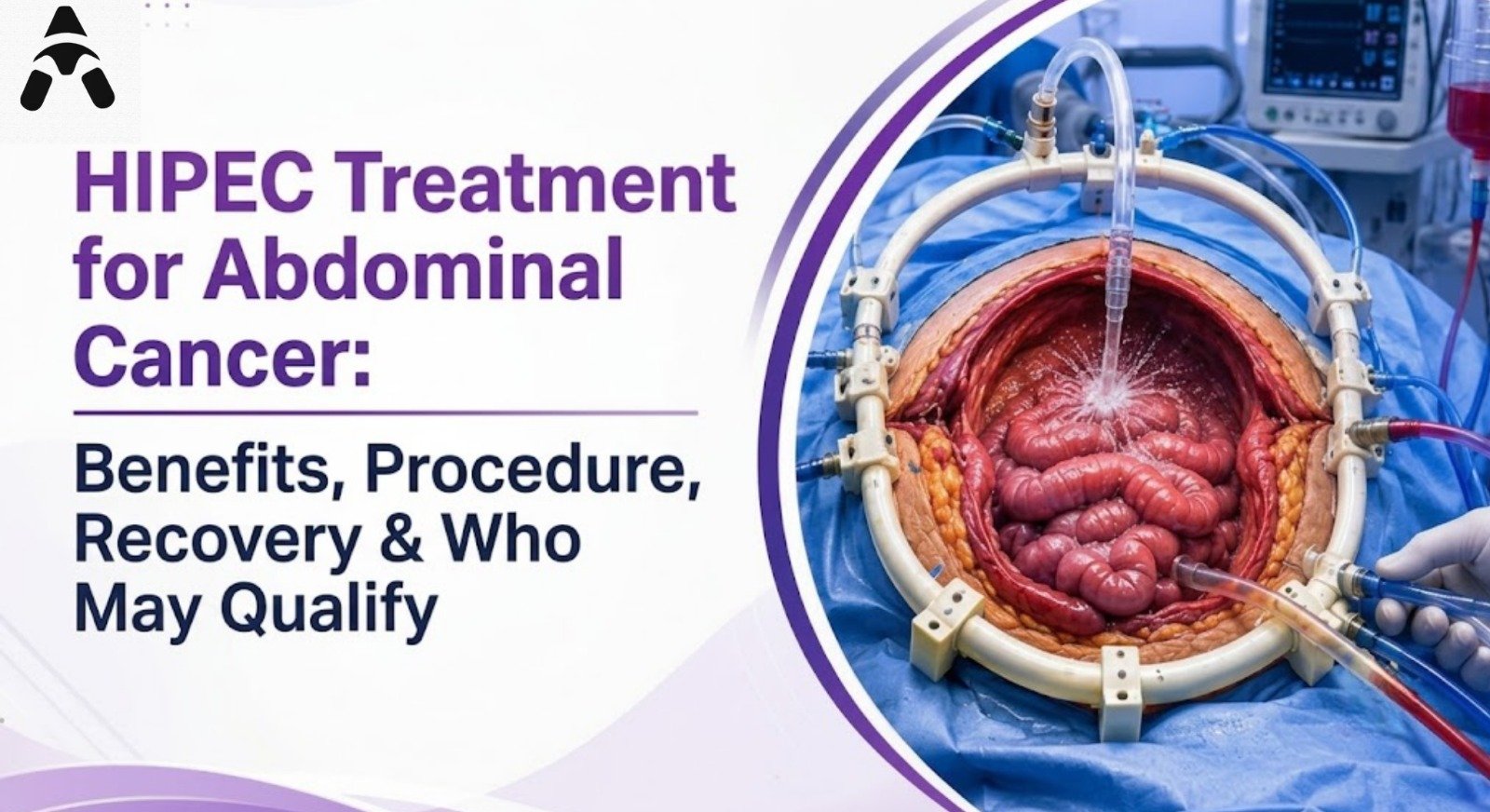
HIPEC, or Hyperthermic Intraperitoneal Chemotherapy, is an advanced treatment approach used in carefully selected patients whose cancer has spread to the peritoneum, the thin lining inside the abdomen. It combines surgery to remove visible cancer with heated chemotherapy delivered directly into the abdominal cavity.
The National Cancer Institute describes HIPEC as a method of delivering chemotherapy into the abdomen after as much of the tumour as possible has been surgically removed.
What Is HIPEC Treatment?
HIPEC is more than chemotherapy alone. It is generally performed as part of a larger surgical procedure and involves two main stages.
First, the surgeon performs cytoreductive surgery (CRS) to remove visible or detectable cancer deposits from the abdomen. Once as much of the cancer as possible has been removed, heated chemotherapy is circulated inside the abdominal cavity.
The aim is to target microscopic cancer cells that may remain after surgery.
What Does HIPEC Involve?
HIPEC usually involves:
- Major surgery to remove visible cancer deposits where possible
- Delivery of chemotherapy directly into the abdominal cavity
- Use of heated chemotherapy for a specific period
- Close monitoring during and after the procedure
- Follow-up treatment and surveillance after recovery
HIPEC may be considered for selected cases of cancers such as colorectal cancer, gastric cancer, ovarian cancer and appendiceal cancer, as well as conditions such as pseudomyxoma peritonei and peritoneal mesothelioma.
However, the evidence and suitability of HIPEC vary depending on the type of cancer, how extensively it has spread, whether the visible cancer can be removed and the patient’s overall health.
Why Is Chemotherapy Heated During HIPEC?
One of the distinctive features of HIPEC is the use of heated chemotherapy.
Heat may increase the effectiveness of certain chemotherapy medicines and may help them penetrate cancerous tissue more effectively. Because the chemotherapy is delivered directly into the abdominal cavity, it can provide a concentrated treatment to the area affected by the cancer.
However, HIPEC is not suitable for every patient. The potential benefits have to be considered alongside the risks of major surgery and the patient’s individual cancer characteristics.
Who May Be a Candidate for HIPEC?
Being diagnosed with cancer that has spread to the abdomen does not automatically mean that HIPEC is appropriate.
Doctors carefully assess each patient before recommending CRS and HIPEC. Some of the factors they may consider include:
- Type of cancer: Different cancers respond differently to CRS and HIPEC.
- Extent of disease: Doctors assess how widely the cancer has spread within the abdomen.
- Possibility of removing the cancer: The surgical team considers whether visible cancer can be removed safely and effectively.
- Overall health: Nutrition, organ function, fitness and the ability to tolerate major surgery are important.
- Previous treatment: The response to chemotherapy or other treatments may influence treatment planning.
- Peritoneal Cancer Index (PCI): PCI is used to assess the extent and distribution of cancer within the abdominal cavity.
Recent expert recommendations support considering CRS and HIPEC in selected patients with peritoneal metastases from colorectal and gastric cancers. There is also stronger evidence for its use in certain situations involving conditions such as pseudomyxoma peritonei and peritoneal mesothelioma.
This is why HIPEC is considered an individualised treatment, rather than a standard treatment for everyone with abdominal cancer.
What Happens During HIPEC Treatment?
The exact procedure varies according to the cancer type, extent of disease and treatment plan. However, the treatment journey generally involves several stages.
1. Detailed Evaluation
Before treatment, the cancer team performs a detailed assessment. This may include imaging scans, blood tests and other investigations. In some cases, doctors may use a minimally invasive procedure to examine the abdomen and determine the extent of disease.
The purpose is to understand whether CRS and HIPEC are technically possible and appropriate.
2. Cytoreductive Surgery
If the patient is considered suitable, the surgeon performs cytoreductive surgery.
The goal is to remove as much visible cancer as safely possible. Depending on where the cancer has spread, this may involve removing affected tissues or organs.
Because CRS can be an extensive operation, careful planning is essential.
3. Heated Intraperitoneal Chemotherapy
After the visible cancer has been removed, the HIPEC portion of the procedure begins.
A chemotherapy solution is heated to a controlled temperature and circulated directly inside the abdominal cavity for a specific period.
The aim is to treat microscopic cancer cells that may remain after surgery.
4. Recovery and Close Monitoring
After CRS and HIPEC, patients require close observation in the hospital.
The medical team monitors areas such as:
- Pain control
- Food and fluid intake
- Bowel function
- Blood counts
- Kidney function
- Electrolyte levels
- Wound healing
- Signs of infection
- Overall organ function
Because CRS and HIPEC can involve major surgery, recovery needs careful medical supervision.
How Long Does HIPEC Recovery Take?
Recovery after HIPEC varies from person to person. It depends on the extent of surgery, the type of cancer, the patient’s general health and whether additional treatment is required.
Early recovery may involve:
- Tiredness and weakness
- Pain or discomfort
- Changes in appetite
- Temporary changes in bowel function
- Fluid and electrolyte monitoring
- Gradual return to eating
- Assistance with movement and breathing exercises
- Wound care and medication management
Hospitalisation is generally required, followed by a gradual return to normal activities.
Complete recovery can take several weeks or longer, particularly when extensive surgery has been performed.
The goal during recovery is not to rush the process. Your cancer care team will guide you regarding food, physical activity, wound care, medicines and follow-up appointments according to your individual progress.
What Are the Benefits and Limitations of HIPEC?
One potential advantage of CRS and HIPEC is that it combines the physical removal of visible cancer with the direct delivery of chemotherapy to the abdominal cavity.
For carefully selected patients, this approach may form part of a treatment strategy for cancer involving the peritoneum.
However, HIPEC is a major treatment and is associated with potential risks and complications. These can vary depending on the extent of surgery, the patient’s health and the type of cancer being treated.
Research has also shown that the benefits of HIPEC are not the same across all cancer types and patient groups. Evidence continues to evolve, particularly for certain colorectal, gastric and ovarian cancers.
Therefore, HIPEC should not be viewed as a guaranteed cure or as the right treatment for every person with abdominal cancer.
Instead of simply asking, “Is HIPEC good for cancer?”, a more useful question is:
“Could the potential benefits of CRS and HIPEC outweigh the risks in my particular situation?“
This is a decision that should be discussed with a specialist cancer team after reviewing your scans, pathology, previous treatments and overall health.
Meet the Expert: Dr. Asit Arora
Dr. Asit Arora is listed in the clinic information as an oncologist at Apollo Hospitals in Delhi, with a focus on the treatment of stomach and colon cancers.
For patients considering HIPEC, consultation should go beyond simply asking whether they can undergo the procedure. A detailed discussion should cover:
- Why HIPEC is being considered
- The goal of treatment
- Whether the cancer can be surgically removed
- Expected benefits and possible risks
- Other available treatment options
- Recovery and hospital stay
- The possibility of additional treatment after surgery
A patient-focused approach helps individuals and families understand their options and participate in treatment decisions alongside their cancer care team.
The HIPEC Treatment Journey
| Stage | What Usually Happens |
| Evaluation | Imaging, blood tests and assessment by the cancer care team |
| Treatment Planning | Cancer spread, overall health, previous treatment and surgical feasibility are assessed |
| Cytoreductive Surgery | Visible cancer deposits are removed when safely possible |
| HIPEC | Heated chemotherapy is circulated directly inside the abdomen |
| Hospital Recovery | Pain, nutrition, bowel function and organ function are closely monitored |
| Follow-Up | Recovery, test results, additional treatment and ongoing surveillance are discussed |
What Should You Do If You Have Peritoneal Metastasis?
Being diagnosed with advanced or metastatic cancer can feel overwhelming. However, treatment options can vary significantly from one patient to another.
HIPEC may be appropriate for some carefully selected patients, while others may benefit from systemic medicines, surgery without HIPEC, targeted treatments, clinical trials or treatments focused on controlling symptoms and improving quality of life.
The right treatment depends on factors such as:
- Your cancer type
- Location and extent of spread
- Scan and pathology results
- Previous treatments
- Overall health
- Nutritional status
- Whether surgery can safely remove the visible disease
- Your treatment goals
A specialist evaluation can help determine which options may be relevant to your situation.
Discuss Your HIPEC Treatment Options in Delhi
If you or a family member has been diagnosed with abdominal cancer or peritoneal metastasis, do not assume that a diagnosis of advanced cancer means there are no treatment options left.
For selected patients, CRS and HIPEC may be considered as part of a comprehensive cancer treatment plan. The decision should be based on detailed evaluation rather than the cancer stage alone.
Discuss your scans, pathology reports, previous treatments and overall health with your cancer specialist to understand whether HIPEC or another treatment approach may be appropriate for you.
Call: 098212 16022
Consultation Address
OPD 67, Apollo Hospital
NH-19, Jasola Vihar
New Delhi, Delhi – 110020